support@yorubalibrary.com
+2348073529208, 07038599574
Within Yoruba oral tradition, many performance forms share similarities in structure but differ in regional identity, style, and cultural emphasis. One of such traditions is È̩gẹ̀, a form of oral literature closely related in structure and function to Rárà, yet distinct in its cultural home and expressive character.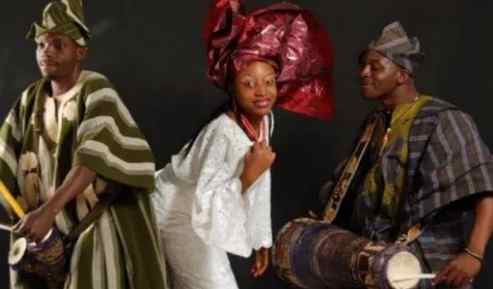 While Rárà is historically originated from Ọ̀yọ́, È̩gẹ̀ is widely associated with the Ẹ̀gbá people, where it has developed its own performance identity. Despite this regional distinction, both traditions share a common foundation: the use of structured praise, lineage recognition, and poetic delivery to honor individuals of status or importance.
È̩gẹ̀ is not restricted to royal courts or specific spiritual festivals. Instead, it is a flexible performance tradition that appears across a wide range of social events. Whether at celebrations, gatherings, or community ceremonies, È̩gẹ̀ serves as a verbal art form that highlights identity, respect, and social recognition.
At its core, È̩gẹ̀ is about elevated speech—the transformation of ordinary language into refined praise that commands attention, evokes admiration, and shows social dignity. It is both a performance and a cultural statement about the value of words in Yoruba society.
Wait a bit... Do you know that understanding the Orishas requires more than surface knowledge?
Get a structured and comprehensive eBooks on Orisha Osun, Orisha Oro, Orisha Sango, Orisha Ogun, Orisha Obatala, and Orisha Esu, covering how they are deified, rituals, taboos, festivals, oriki and more. Available individually or in bundles
What È̩gẹ̀ Represents in Yoruba Oral Tradition
È̩gẹ̀ functions as a praise-performance tradition, where individuals are honored through structured poetic expression. It draws heavily from Yoruba oríkì (lineage praise), historical references, and personal achievements to construct a meaningful portrait of the subject being celebrated. Like Rárà, È̩gẹ̀ is not casual speech. It requires knowledge of:
• family lineage and ancestry
• personal history of the subject
• cultural expressions of praise
• Yoruba poetic structure and tone
With these elements, È̩gẹ̀ becomes a refined form of public recognition. It is not simply about saying good things; it is about saying them in a way that shows cultural depth and linguistic mastery.
Regional Identity: The Ẹ̀gbá Contribution
One of the defining features of È̩gẹ̀ is its strong association with the Ẹ̀gbá region. While similar praise traditions exist across Yoruba land, È̩gẹ̀ is particularly shaped by Ẹ̀gbá cultural expression, which gives it a distinct tone and style.
This regional identity is important because it shows how Yoruba oral literature is not uniform. Instead, it adapts to local histories, dialects, and performance preferences. In the case of È̩gẹ̀, the Ẹ̀gbá people have preserved and refined it as part of their social and ceremonial life.
Performance Context: Where È̩gẹ̀ is Used
Unlike oral traditions tied to specific deities, festivals, or rituals, È̩gẹ̀ is highly flexible. It can be performed during a wide range of social occasions, including:
1) traditional marriages
2) naming ceremonies
3) community celebrations
4) public gatherings
5) honorific events for respected individuals
This flexibility makes È̩gẹ̀ one of the most socially accessible Yoruba oral forms. It is not limited to ritual timing; instead, it thrives wherever people gather to celebrate or acknowledge achievement.
Structure and Content of È̩gẹ̀
The structure of È̩gẹ̀ is built around praise narration and poetic elevation. Performers use carefully chosen Yoruba expressions to highlight the dignity, achievements, and lineage of the subject. Typical elements include:
• oríkì (lineage praise poetry)
• historical references to family background
• descriptions of personal success or character
• symbolic language that elevates identity
Similarity Between È̩gẹ̀ and Rárà
È̩gẹ̀ is often described as being very similar to Rárà, and this similarity is shown in both structure and purpose. Both traditions:
1) are based on praise poetry
2) highlight lineage and identity
3) are performed in social gatherings
4) can lead to emotional or material appreciation from the audience
However, the key difference lies in regional origin and stylistic variation:
a) Rárà is strongly associated with Ọ̀yọ́ tradition
b) È̩gẹ̀ is rooted in Ẹ̀gbá cultural expression
Yoruba Herbs, Plants and Medicine Made Simple!
Spiritual knowledge is powerful—but when combined with herbal wisdom, it becomes complete. Check out Common Ailments and Their Natural Cures (preview here), Identification & Properties of Different Plants (see sample), Yoruba proverbs associated with different Herbs (see preview).
With these e-Books, you can treat illnesses naturally. Understand the proverbs behind plants/herbs. Identify plants, roots, barks with confidence.
Gender Participation and Inclusiveness
One of the strengths of È̩gẹ̀ is its inclusiveness. Both men and women participate actively in its performance. This openness showcases the communal nature of Yoruba praise traditions, where skill in language and performance is valued regardless of gender. Each performer contributes their own voice, style, and interpretation, making È̩gẹ̀ a dynamic and evolving tradition.
Performance Style: Rhythm, Tone, and Expression
È̩gẹ̀ is not performed as plain speech. It is delivered with:
• rhythmic pacing
• tonal variation
• expressive Yoruba intonation
• structured repetition
These elements enhance its musicality and emotional impact. The performer must balance clarity of praise with artistic delivery, ensuring that the audience both understands and appreciates the performance. In many cases, È̩gẹ̀ creates a strong emotional response, especially when it highlights the dignity or achievements of the person being honored.
Cultural Function: Recognition Through Words
At its core, È̩gẹ̀ serves as a system of verbal recognition and social elevation. It ensures that individuals are publicly acknowledged for who they are and what they represent. In Yoruba society, being praised in structured oral performance is a form of honor. It shows social status and strengthens communal respect.
Example of Practical Rendition of È̩gẹ̀
Find below the classic example of how Ege is rendered:
Lead
E kaayo Lipooro
E keewu omo
Odumare a domo nee si
E kaalejo
Ki n ba de Pooro
Mo mo bi a n gba
M aku gba 'le baba mi
Osu o ra hun
Lakesan 'mo loko nile Iseri
Omo pankere edun
Ayilowo mo ko re lu gbawun resa
Omo eleporo yoboyobo
Omo elepo kan yoboyobo
Ti ko se e ro, ko see fa tu
Afaroko ide yii mu beere
N ko maa kosu titu
Ki n sepe soraa mi
Omo bu mi ki n nowo lowo
Omo na mi n nooro
O dolosu lo loko
E la mopa wa o
Chorus:
Ariwo yee ee ee
Olosu lo loko
In performance, the lead voice introduces the individual being praised, drawing from lineage and achievements. The delivery is rhythmic and expressive, while other performers may uphold the praise through repetition or supportive responses. The audience engages emotionally, responding with admiration and appreciation.
The Continuity in Modern World
È̩gẹ̀ continues to hold an important place in Yoruba cultural life, especially among the Ẹ̀gbá people. It preserves history through praise, strengthens social bonds, and cements the importance of respectful speech.
Learn about Bọ̀lọ̀jọ̀, a Yoruba oral tradition of …
The composition and rendition of Òkú-Pípè, a solem…
CONNECT WITH US: