support@yorubalibrary.com
+2348073529208, 07038599574
In Yoruba cultural life, speech is taken with utmost care. Words can comfort, correct, expose, or preserve. Among the many oral traditions that show this belief, È̩fẹ̀ occupies a unique space as a form of satirical performance built on humor, storytelling, and social observation. Found prominently among the Ègbádò, Àwórì, Kétu, and Ìbàràpá Yoruba groups, È̩fẹ̀ translates loosely as “jest,” but its meaning goes far beyond simple laughter.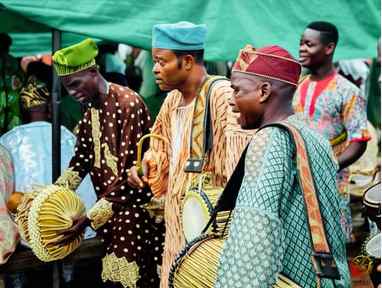 It is a performance tradition that transforms real-life situations—especially uncomfortable or morally questionable ones—into songs and rhythmic commentary. Instead of direct confrontation, È̩fẹ̀ uses humor as a medium to depict society back to itself. People laugh, but they also recognize themselves in the message being delivered.
In traditional Yoruba communities, È̩fẹ̀ is not just entertainment; it is part of social regulation. It observes daily life closely and converts public behavior into performative expression. With this, it becomes a living archive of what a community tolerates, condemns, or quietly struggles with.
Because of its nature, È̩fẹ̀ also plays a psychological role. For many older people, it provides relief from overthinking and emotional stress. By turning serious social issues into structured humor, it reduces mental burden while still addressing the reality of those issues.
Wait a bit... Do you know that understanding the Orishas requires more than surface knowledge?
Get a structured and comprehensive eBooks on Orisha Osun, Orisha Oro, Orisha Sango, Orisha Ogun, Orisha Obatala, and Orisha Esu, covering how they are deified, rituals, taboos, festivals, oriki and more. Available individually or in bundles
What È̩fẹ̀ Truly Represents in Yoruba Society
È̩fẹ̀ is best understood as a social message performed through humor. It does not invent stories in isolation; it draws from real events, rumors, witnessed behavior, and community discussions. Once an issue becomes widely known or emotionally significant in a town, it may eventually be composed into an È̩fẹ̀ performance. The power of È̩fẹ̀ lies in its indirectness. It rarely mentions names openly. Instead, it uses:
• unique storytelling
• exaggerated descriptions
• recognizable situations
• rhythmic Yoruba phrasing
This allows audiences to understand the message without public accusation. In Yoruba social structure, this method prevents direct conflict while still maintaining accountability.
The Role of Àṣẹfè: Performers as Social Observers
The performers of È̩fẹ̀, often referred to as Àṣẹfè, function as cultural observers and interpreters. They are not simply singers or entertainers; they are informally recognized as people who “hear and re-tell society.”
Their role includes:
1) observing community behavior
2) collecting notable incidents (both good and bad)
3) transforming them into poetic satire
4) performing them during social or festival gatherings
Because of this, Àṣẹfè (the performers) are both respected and cautiously watched. People are aware that actions carried out in public life may later re-appear in performance. This awareness alone acts as a form of social control.
Moral Function: Correction Without Direct Confrontation
One of the strongest roles of È̩fẹ̀ is moral correction through humor. Yoruba society places high value on communal unity, and direct accusation can sometimes lead to tension or conflict. È̩fẹ̀ provides a safer route. When misconduct becomes known in a community, it may be transformed into performance material. Common examples include:
1. Adultery and Broken Trust
If an individual engages in extramarital relations—especially involving another person’s spouse—it is seen as a serious moral violation. In È̩fẹ̀ performance, such behavior may be re-shaped into a humorous but pointed narrative. The audience laughs at the exaggeration, but the subject matter remains clearly understood. The aim is not destruction of reputation, but correction of behavior through public performance.
2. Theft and Everyday Dishonesty
Even small acts of dishonesty are not ignored. For example, if a farmer secretly harvests yams from a neighboring farm, such behavior may later appear in an È̩fẹ̀ song. The situation is re-told in a humorous and exaggerated way, making the wrong-doing visible to the community. The performer does not need to mention names; the context itself is often enough for recognition.
3. Arrogance and Social Misconduct
Individuals who behave as though they are “untouchable” or above community standards may also become subjects of È̩fẹ̀. Their attitude, speech, or actions may be re-created in performance, allowing the community to respond indirectly. This helps maintain balance between individual behavior and collective expectations.
Performance Style: Rhythm, Rhyme, and Controlled Humor
È̩fẹ̀ is performed with strong musical and linguistic structure. It is not spoken casually; it is carefully arranged with:
• rhythmic Yoruba phrasing
• rhyme patterns
• tonal exaggeration
• coordinated chorus responses
The delivery is lively and engaging, often making audiences laugh repeatedly. However, beneath the humor is a message that shows real social conditions. The success of an È̩fẹ̀ performance depends on how well the performer balances entertainment with meaning. Too much seriousness removes the humor; too much humor weakens the message. The strength lies in the balance between both.
Yoruba Herbs, Plants and Medicine Made Simple!
Spiritual knowledge is powerful—but when combined with herbal wisdom, it becomes complete. Check out Common Ailments and Their Natural Cures (preview here), Identification & Properties of Different Plants (see sample), Yoruba proverbs associated with different Herbs (see preview).
With these e-Books, you can treat illnesses naturally. Understand the proverbs behind plants/herbs. Identify plants, roots, barks with confidence.
Connection to Gèlèdé Festival and Masquerade Culture
È̩fẹ̀ is closely linked to the Gèlèdé festival, a Yoruba masquerade tradition that celebrates social unity and acknowledges spiritual and social forces within the community. Within Gèlèdé performances:
1) masquerades represent visual
2) È̩fẹ̀ provides spoken and sung commentary
3) both combine to show society back to itself
This makes È̩fẹ̀ an essential interpretive layer within the festival. It explains, reacts to, and amplifies the meaning behind what is being seen and experienced.
Gender Participation and Cultural Openness
Unlike certain Yoruba oral traditions that are restricted by gender or role, È̩fẹ̀ is more open in participation. Both men and women take part in its performance. This inclusiveness strengthens its role as a communal tradition. It is not owned by a single group but shared across society, exhibiting the idea that social behavior concerns everyone.
Example of Practical Rendition of È̩fẹ̀
Find below the performance example of Efe:
Lead:
E o fun mi se,
Gbogbo iworan lotun-un losi
Eyin awooro oosa
Efe oni di sise tabi aise?
Response:
E ee e, a o fun o se
Lead
Ori lo kun, soun le n pe alabe
Odo lo kun le n pomuwe
Oko lo to da, soun le n palabe
Odo lo kun le n pomuwe
Chorus:
Efe lo de le wa pe mi
E o fun mi se
Gbogbo iworan lotun-un losi
Eyin akijele lawowo Oosa
Efe oni di tabi aise?
Response
Baba mo somode kekere
Ko o jinde, ko o sin mi lop
Latokun, koo lana wa ko mi
Mo pe kuelu, ko n de o
Iya Olu-eye, e wa ka sere
Mo ke solode o, eye oganjo
Iya Olu-eye, e wa ka sere
Mo ke solode o, eye oganjo
Chorus:
E o fun mi se
Gbogbo iworan lotun-un losi
Eyin akijele laworo Oosa
Efe oni di sise tabi aise?
Response:
E eee, a n fi e se
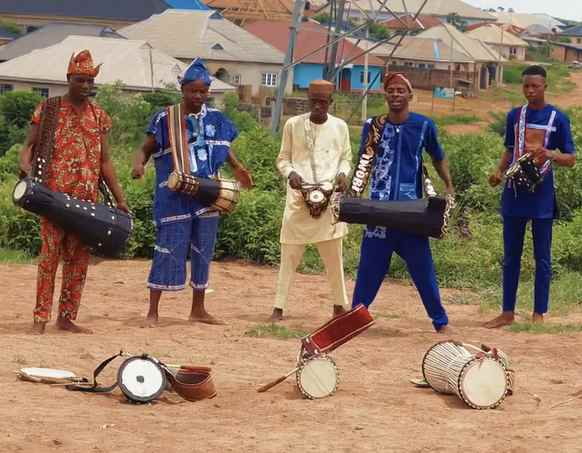
In actual performance, the lead performer introduces a situation drawn from real community life. The narrative is then broken into humorous exaggeration, while the chorus responds with rhythm and repetition. The audience reacts with laughter, recognition, and deep thought as the underlying message becomes clear.
Cultural Importance and Continuity
È̩fẹ̀ continues to function as a system of social commentary in Yoruba society. It preserves memory, regulates behavior, and has cultural values without formal enforcement structures.
Learn about Bọ̀lọ̀jọ̀, a Yoruba oral tradition of …

Learn about È̩gẹ̀, a Yoruba oral praise tradition …
CONNECT WITH US: