support@yorubalibrary.com
+2348073529208, 07038599574
In Yoruba society, language is not only a tool for communication—it is a measure of wisdom, identity, and social power. The ability to speak well, to select the right words at the right moment, and to deliver them with precision has long been valued. Within this cultural framework, certain forms of oral expression rise beyond ordinary speech and become instruments of influence. One of such forms is Rárà, a distinctive type of oral literature built on praise, performance, and reward.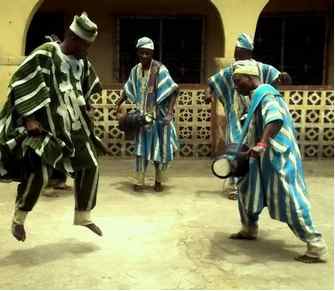 Rárà is not simply about saying good things about someone. It is a structured and skillful performance that draws from a great knowledge of lineage, history, and personal achievements. When performed correctly, it has the power to move the listener emotionally, often leading to spontaneous acts of generosity. In many cases, the individual being praised responds with gifts—money, land, clothing, or other valuables—as a sign of appreciation. This exchange is not seen as transactional in a crude sense; it is a cultural acknowledgment of the performer’s skill and the value of the words delivered.
The creation of Rárà can be traced to the old Ọ̀yọ́ Kingdom, where it held a special place within the royal court. In its early form, Rárà was closely associated with the Aláàfin, the king of Ọ̀yọ́. Performers would render these praise chants to please the king, sometimes even serving as a form of morning salutation to awaken him with words that affirmed his authority and lineage. At that time, access to such performance was limited, and the content was tailored specifically to royal identity.
Over time, Rárà expanded beyond the palace and became more widely practiced across Yoruba communities. However, its strongest presence remains in Ọ̀yọ́, where its historical engineering continue to shape its style and delivery. Even as it spread, the essence of Rárà remained intact—its focus on praise, its reliance on lineage knowledge, and its ability to inspire generosity.
A defining feature of Rárà is its hereditary nature. Many performers are born into families where the practice has been sustained for generations. Children grow up observing their parents or elders perform, gradually learning the structure, tone, and content of the chant. This early exposure ensures continuity and preserves the authenticity of the tradition. By the time they begin performing independently, they are not starting from scratch—they are continuing a lineage.
Rárà also stands out for its inclusiveness in terms of gender. Both men and women actively participate in its performance. Each brings their own style, voice, and presence, contributing to the richness of the tradition. The performance is rarely a solo act; it often involves a group, with coordinated delivery that enhances its impact.
Sound and rhythm play a crucial role in shaping the experience of Rárà. While the words comprises of the message, musical instruments provide the structure that supports delivery. The ṣẹ̀kẹ̀rẹ̀ (a beaded gourd instrument) and the agogo (gong) are commonly used to create rhythm and maintain tempo. These instruments do not overshadow the chant; they complement it, allowing the performer’s voice to remain central.
At its core, Rárà shows a broader Yoruba value—the recognition of excellence and the importance of acknowledging it publicly. Whether the subject is a king, a community leader, or an accomplished individual, the act of praise cementing the social bonds and encourages continued achievement. It is both a celebration and a reminder of identity.
Wait a bit... Do you know that understanding the Orishas requires more than surface knowledge?
Get a structured and comprehensive eBooks on Orisha Osun, Orisha Oro, Orisha Sango, Orisha Ogun, Orisha Obatala, and Orisha Esu, covering how they are deified, rituals, taboos, festivals, oriki and more. Available individually or in bundles
What is Rárà?
Rárà is a form of Yoruba oral literature centered on praise performance. It involves the delivery of carefully crafted words that highlight the lineage, achievements, and qualities of an individual. The performance is designed to surprise the listener, often leading to visible emotional reactions and acts of generosity. Unlike casual praise, Rárà requires deep knowledge and skill. The performer must understand the subject’s background and be able to present it in a way that is both engaging and respectful.
Historical Origin: From the Ọ̀yọ́ Palace to the Public Space
Rárà originated in the Ọ̀yọ́ Kingdom, where it was initially performed for the Aláàfin. In this royal context, it served as a means of honoring the king and upholding his majesty. Performers would use lineage praise and carefully chosen words to create an atmosphere of respect and admiration. As the practice spread beyond the palace, it became accessible to a wider audience. Today, while it is still strongly associated with Ọ̀yọ́, Rárà can be found in various parts of Yoruba land.
Hereditary Nature of Rárà Performance
One of the most distinctive aspects of Rárà is its transmission through family lines. Children of performers often accompany their parents to events, observing and gradually participating in the performance. This method of learning ensures that the tradition is preserved in its original form. It also creates a sense of continuity, where each generation builds upon the knowledge of the previous one. This is why one Yoruba proverb says "Orisha ti a ko ba fe ki o parun, sise ni a fi n han omo eni"
Structure and Delivery of Rárà
Rárà is built on the use of Oríkì, or lineage praise poetry. The performer selects and arranges these praises in a way that highlights the subject’s identity and achievements. The delivery is rhythmic and expressive, often involving repetition and variation. The goal is to maintain the listener’s attention while building emotional intensity.
Performance Setting and Audience Interaction
Rárà is typically performed during social gatherings, ceremonies, and events where individuals of status are present. The interaction between performer and subject is central to the experience. As the performance progresses, the subject may respond by offering gifts. This response is not forced; it arises from the emotional impact of the chant.
Yoruba Herbs, Plants and Medicine Made Simple!
Spiritual knowledge is powerful—but when combined with herbal wisdom, it becomes complete. Check out Common Ailments and Their Natural Cures (preview here), Identification & Properties of Different Plants (see sample), Yoruba proverbs associated with different Herbs (see preview).
With these e-Books, you can treat illnesses naturally. Understand the proverbs behind plants/herbs. Identify plants, roots, barks with confidence.
Musical Accompaniment: Ṣẹ̀kẹ̀rẹ̀ and Agogo
The performance of Rárà is supported by musical instruments such as the ṣẹ̀kẹ̀rẹ̀ and the agogo. These instruments provide rhythm and help structure the chant. The interplay between voice and instrument creates a balanced performance, where each element supports the other without overshadowing it.
Gender Participation in Rárà
Both men and women are actively involved in Rárà performance. This inclusiveness contributes to the diversity of styles within the tradition. Each performer brings a unique approach, enriching the overall experience while maintaining the core structure of the chant.
Example of Practical Rendition of Rárà
Lyrical example of Rara can be found below:
Mo ni bolowo ba n binu
E je a be e
Bolosi eeyan ba n binu
Dupariola iyun baba ileke
E je a kiran baba re fun un ni
Ki ni o se
Olowo ni e bun un loro so
Oro o dun lenu omo baba talika
Oloun lo s'ogo f'Adumaadan o
Oloun lo s'ogo f'Adumaadan
Ko jogun egbon
Ko je taburo
Oloun lo s'ogo f'Adumaadan o
In performance, the lead voice begins with a strong and clear delivery, introducing the praise. The accompanying instruments maintain a steady rhythm, while other performers may support with responses. The chant builds gradually, capturing the attention of the subject and the audience.
Cultural Significance and Continuity
Rárà remains an important part of Yoruba cultural expression. It upholds the value of recognition, encourages generosity, and preserves lineage knowledge. As it continues to be practiced, it adapts to new contexts while maintaining its traditional foundation. Through Rárà, the power of words remains visible and effective.
Learn about Bọ̀lọ̀jọ̀, a Yoruba oral tradition of …
The composition and rendition of Òkú-Pípè, a solem…
CONNECT WITH US: