support@yorubalibrary.com
+2348073529208, 07038599574
In Yoruba oral tradition, not all speech is meant for daylight. Some expressions belong to silence, darkness, and the stillness of night. Among these specil rendition and contextual forms of oral literature is Ìrèmọ̀jé, a solemn dirge associated with the death of prominent figures within the Ogun (Ọ̀gún) worship and hunter tradition.
Unlike celebratory oral forms that emphasize achievement, rhythm, and communal joy, Ìrèmọ̀jé is based on mourning, remembrance, and emotional depth. It is performed specifically when an important hunter, warrior devotee, or recognized chieftain within the Ogun tradition passes away. In such moments, language becomes heavier, sound becomes slower, and performance becomes a structured expression of grief.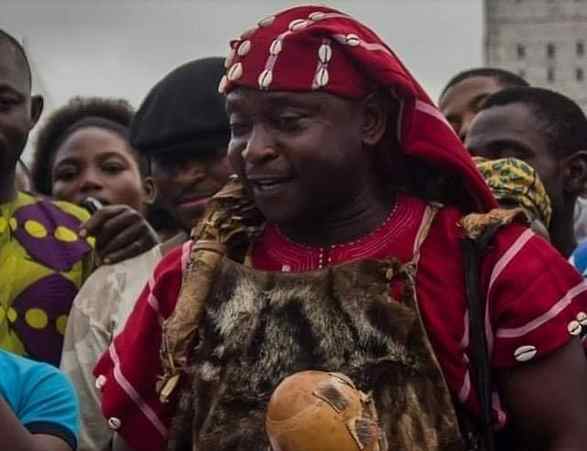 What makes Ìrèmọ̀jé especially distinct is not only its content, but also its timing. It is not performed casually or during daylight hours. It belongs strictly to the night, typically between 10 p.m. and 3 a.m. This restriction is deliberate as it shows the Yoruba understanding that certain emotional and spiritual expressions require darkness to fully carry their weight. Night provides the atmosphere for soberness, seriousness, and connection with ancestral presence.
In contrast, Ìjála, another major oral literature form associated with hunters, celebrates life, courage, and victory. Where Ìjála is bright, energetic, and often performed at any time of the day, Ìrèmọ̀jé is restrained, somber, and time-bound. The two forms exist as emotional opposites within the same cultural world—one honoring life in motion, the other honoring life at rest.
Wait a bit... Do you know that understanding the Orishas requires more than surface knowledge?
Get a structured and comprehensive eBooks on Orisha Osun, Orisha Oro, Orisha Sango, Orisha Ogun, Orisha Obatala, and Orisha Esu, covering how they are deified, rituals, taboos, festivals, oriki and more. Available individually or in bundles
What Ìrèmọ̀jé Represents in Yoruba Hunter Tradition
Ìrèmọ̀jé is more than a dirge; it is a structured remembrance of a life lived within the dangerous and respected world of hunting and Ogun devotion. It comprises the identity of the deceased through:
• lineage praise (oríkì)
• personal achievements
• heroic acts during lifetime
• rank and social recognition
• contributions to the hunting community
In Yoruba thought, a hunter is not merely a person who kills animals. He is a figure associated with courage, survival, spiritual protection, and mastery of dangerous environments. Because of this, the passing of such individuals is treated with structured honor rather than ordinary mourning. With Ìrèmọ̀jé, the community ensures that the memory of the deceased does not fade into silence.
The Night Setting: Why Ìrèmọ̀jé Belongs to Darkness
The restriction of Ìrèmọ̀jé to nighttime performance is one of its most important cultural features. Between 10 p.m. and 3 a.m., the environment is quiet, and removed from daily activity. This silence is not accidental—it supports the emotional depth required for the performance.
Yoruba oral tradition recognizes that grief is not noisy celebration. It requires space, control, and atmosphere. Night provides:
1) emotional stillness
2) reduced public distraction
3) spiritual seriousness
4) connection to ancestors
Content Structure: Life Reflected Through Achievement
The content of Ìrèmọ̀jé closely resembles that of Òkú-Pípè, but with a specific focus on hunters and Ogun devotees. The performance highlights:
• the identity and lineage of the deceased
• their rank within the community or hunting guild
• their bravery and reputation
• their contributions to collective survival
• their relationship with Ogun, the deity of iron and warfare
A key feature is the inclusion of personal tools and experiences of the deceased. The items a hunter used during his lifetime often become central elements of the performance. For example:
1) the type of gun he carried
2) specific animals he hunted
3) dangerous encounters he survived
4) tools or weapons that defined his skill
Performance Style: Controlled Voice, Structured Emotion
Ìrèmọ̀jé is performed with a controlled and deliberate vocal style. The tone is neither loud nor festive. Instead, it is measured, steady, and emotionally restrained. Two main structures are used:
1. Verse-Based Delivery
Here, the performer recites structured lines of praise and remembrance. Each verse highlights a specific aspect of the deceased’s life, allowing the audience to think gradually on their legacy.
2. Call-and-Response Pattern
In some settings, a lead chanter delivers lines while others respond. This creates a shared experience of mourning, where grief is distributed across participants rather than carried by one voice alone.
Yoruba Herbs, Plants and Medicine Made Simple!
Spiritual knowledge is powerful—but when combined with herbal wisdom, it becomes complete. Check out Common Ailments and Their Natural Cures (preview here), Identification & Properties of Different Plants (see sample), Yoruba proverbs associated with different Herbs (see preview).
With these e-Books, you can treat illnesses naturally. Understand the proverbs behind plants/herbs. Identify plants, roots, barks with confidence.
Absence of Musical Instruments: Silence as Respect
One of the defining characteristics of Ìrèmọ̀jé is its near-complete absence of musical instruments. Unlike celebratory Yoruba performances that rely heavily on drums, rhythm, and dance, Ìrèmọ̀jé strips performance down to voice and meaning.
The only exception is the hunter’s pipe (whistle), a unique instrument used in hunting culture. Its presence is not for entertainment but for cultural identification. The sound of the pipe connects the performance to the world of hunting, memory, and lived experience. The absence of drums shows the seriousness of the occasion, ensuring that attention remains on the words being spoken.
Example of Practical Rendition of Ìrèmọ̀jé
Sample chorus of Iremoje as it is being performed by hunters:
Iba Ogundele, baba mi Adio
Aido elerun-kan-an-bon
Afinju ode ti i feyin erin-in tore
Akanda eeyan ti i fawo ekun rewunja
Ogunsola lo lare oni
Ogunsola agboobon
A-ji-fnu-igbo sele, odee ti i beran gbe inu oko
Ogunsola lo n'le yii, o de mo
Olori ode regbo, a o rabo
Ogunsola o-ji-lloru-rin-kirin-rin-kiri
Keranko buburu o le pa a je
Ko le doran si baale lorun
Ko doran, ko di'hun ti o ni i tan
Ko kango, ko kanju, ko si koko
Kolornasi eeyan ti i renu aginju laajin
Ogunsola Adio, 'Logbojo logbooluke
Omo gbandu ike
Omo a-ponke-bi-e-n-ponmo
Esa Ogbin, ara Ogbojo
In performance, the lead chanter begins with a slow, controlled voice, introducing the lineage and identity of the deceased. Each verse shows gradually, supported by quiet responses from others. The absence of instruments allows the words to dominate the space, creating a more engaging environment for all participants.
Relationship Between Ìrèmọ̀jé and Ìjála
Ìrèmọ̀jé and Ìjála represent two emotional directions within Yoruba hunter oral literature:
• Ìjála: celebrates life, victory, bravery, and success
• Ìrèmọ̀jé: mourns death, reflects on legacy, and expresses sorrow
While Ìjála can be performed at any time and often accompanies joyful gatherings, Ìrèmọ̀jé is strictly time-bound and emotionally restrained. Together, they form a cultural system that acknowledges both achievement and mortality.
Cultural Usefulness: Memory, Identity, and Respect
Ìrèmọ̀jé plays a vital role in preserving the identity of hunters and Ogun devotees within Yoruba society. It ensures that:
1) important figures are not forgotten
2) their achievements are publicly recognized
3) their role in the community is preserved in oral memory
It also upholds respect for the profession of hunting, which historically carried both spiritual and social importance. Through structured mourning, the community maintains continuity between the living and the dead, ensuring that memory is preserved through sound and language.
Learn about Bọ̀lọ̀jọ̀, a Yoruba oral tradition of …
The composition and rendition of Òkú-Pípè, a solem…
CONNECT WITH US: