support@yorubalibrary.com
+2348073529208, 07038599574
Among the many expressive forms within Yoruba oral tradition, some stand at the joint of music, poetry, and performance. Dadakúàdà is one of such forms—a rich musical genre that combines structured singing, cultural expression, and rhythmic instrumentation to create a engaging performance experience.
Dadakúàdà is widely associated with Ilorin and its surrounding regions in Kwara State, where it first gained recognition as a distinctive style of musical storytelling. Over time, its performance has extended far beyond its place of origin, spreading into other Yoruba-speaking areas such as Ọ̀yọ́, Ìbàdàn, Lagos, Òṣogbo, Ìjẹ̀bú, and Ekiti. Despite this geographical expansion, it retains its core identity based on traditional Yoruba expression. At its foundation, Dadakúàdà is not just music—it is oral literature delivered through melody. It combines lyrical content, proverbs, idiomatic expressions, and cultural references with instrumental accompaniment, creating a performance that is both entertaining and meaningful. The listener is not only carried along by the sound but also by the depth of language and message within the songs.
One of the most defining qualities of Dadakúàdà is its adaptability. It does not belong to a single type of occasion. Instead, it adjusts its tone, content, and delivery based on the event in which it is performed. This flexibility is the topmost unique feature of the song.
Origin and Spread of Dadakúàdà
Dadakúàdà originated in Kwara State, particularly within Ilorin, where it developed as a recognized musical genre. From this base, it gradually spread to other Yoruba regions, carried by performers, cultural exchange, and audience appreciation.
Its expansion into cities such as Ìbàdàn and Lagos shows its ability to get accepted with diverse audiences. Even as it spreads, performers maintain its traditional structure, ensuring that it does not lose its cultural identity.
Musical Structure: Melody, Rhythm, and the Role of Kànàngó
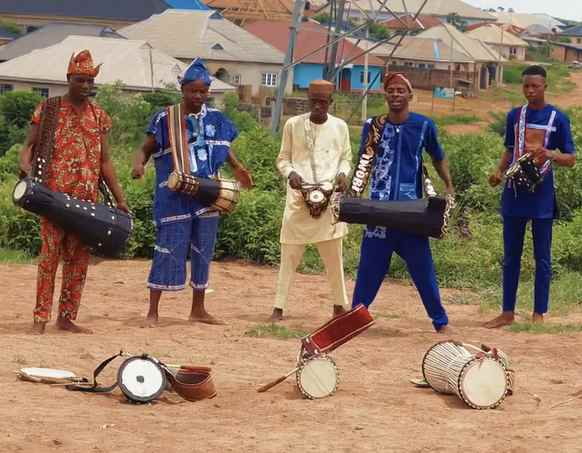
A defining feature of Dadakúàdà is its melodious nature, supported by traditional drums known as Kànàngó. These drums provide rhythmic structure and enhance the flow of the performance. The music is carefully arranged to balance:
1) vocal delivery
2) instrumental rhythm
3) lyrical clarity
The melody is often smooth and engaging, allowing listeners to follow both the sound and the message without strain. The rhythm created by the Kànàngó drums supports the singer, guiding the pace and emotional tone of the performance.
Wait a bit... Do you know that understanding the Orishas requires more than surface knowledge?
Get a structured and comprehensive eBooks on Orisha Osun, Orisha Oro, Orisha Sango, Orisha Ogun, Orisha Obatala, and Orisha Esu, covering how they are deified, rituals, taboos, festivals, oriki and more. Available individually or in bundles
Performance Context: A Genre for All Occasions
Dadakúàdà is not limited to a specific type of event. It is performed across a wide range of social gatherings, including:
a) Naming ceremonies
b) Traditional marriages
c) Funeral rites
d) Community celebrations
What makes it particularly unique is that the tone of the performance changes depending on the occasion. For example: At a naming ceremony, the music is lively, joyful, and celebratory while at funeray, one can expect the tone to become respectful, and emotionally grounded. This adaptability ensures that the performance always goes with the mood and purpose of the event.
Language and Expression: Proverbs, Idioms, and Cultural Depth
The strength of Dadakúàdà lies in its use of rich Yoruba language. Performers incorporate:
• proverbs (òwe)
• idiomatic expressions
• cultural references
These elements elevate the performance beyond simple singing. They create layers of meaning that resonate with listeners who understand the cultural context. Even for those who may not fully grasp every expression, the delivery remains engaging and memorable.
The Role of the Lead Singer and Ensemble
A typical Dadakúàdà performance involves a lead singer supported by an ensemble of performers. The structure is organized and coordinated, ensuring a balanced presentation. The lead singer plays a central role and must possess:
1) strong vocal ability
2) confidence and stage presence
3) deep knowledge of Yoruba language and culture
4) the ability to engage and hold audience attention
The supporting ensemble contributes through rhythm, chorus, and instrumental backing, creating a full and immersive performance.
Yoruba Herbs, Plants and Medicine Made Simple!
Spiritual knowledge is powerful—but when combined with herbal wisdom, it becomes complete. Check out Common Ailments and Their Natural Cures (preview here), Identification & Properties of Different Plants (see sample), Yoruba proverbs associated with different Herbs (see preview).
With these e-Books, you can treat illnesses naturally. Understand the proverbs behind plants/herbs. Identify plants, roots, barks with confidence.
Performance Skill: Boldness and Audience Engagement
Dadakúàdà performers are expected to be bold and expressive. The performance is not passive; it requires active engagement with the audience. This interactive quality is part of what makes Dadakúàdà memorable. It is not just heard—it is experienced. The singer must:
• deliver messages clearly and effectively
• maintain audience interest throughout the performance
• adapt to audience reactions in real time
• create a connection through voice and expression
Emotional Impact and Memory
One of the lasting qualities of Dadakúàdà is its ability to create strong memories. The combination of melody, rhythm, and meaningful language leaves a lasting impression on listeners. People often remember:
1) specific lines or proverbs used
2) the emotional tone of the performance
3) the occasion where it was experienced
This ability to remain in memory cements its role as both entertainment and cultural preservation.
Example of Practical Rendition of Dadakúàdà
Find below the sample chorus of Dadakuada rendition:
Omomose
Eegun-Alare
N o kan o Labuku
Iwo naa n toko ete bo
Komihia
Eebo lo n fo yen
A de gboo, a de koomu
Eebo lo n fo yen
A de kolu iyan, a de kolu eba
Eebo lo n fo yen
Mo ni n o fi yinki gba o loju
Mo gbo eebo mo mo on fo, enu oju irin
Ma fi yinki gba mi loju
N o gba o l'eti enu re o ya
Gomina loba eebo, beegun da a
L'asa, yoo deniyan!
In performance, the lead singer begins with a melodious introduction, supported by the steady rhythm of Kànàngó drums. The ensemble joins in with coordinated responses, while the singer weaves proverbs and expressions into the song. The audience listens attentively, responding to both the sound and the meaning.
Cultural Relevance and Continuity
Dadakúàdà continues to thrive as a dynamic form of Yoruba oral literature. Its adaptability, linguistic richness, and musical appeal ensure its relevance across generations.
As it spreads across regions, it carries with it the cultural identity of its origin while embracing new audiences. It remains a powerful example of how oral tradition can evolve without losing its essence.
Learn about Bọ̀lọ̀jọ̀, a Yoruba oral tradition of …
The composition and rendition of Òkú-Pípè, a solem…
CONNECT WITH US: