support@yorubalibrary.com
+2348073529208, 07038599574
In Yoruba oral tradition, the stories surrounding the royal household of Ṣàngó, otherwise known as Oba Koso has an important place in cultural memory. Ṣàngó is remembered not only as a powerful deity but also as a historical ruler who once governed the old Oyo kingdom before his transformation into an Òrìṣà. His life as a king shaped many narratives about leadership, authority, and the complex relationships within royal households. Among the most discussed aspects of these narratives is the role played by his wives, particularly Ọ̀ṣun.
In Yoruba belief, the wives of Ṣàngó are not portrayed as minor figures in the background of his story. Instead, they are powerful personalities with distinctive roles, qualities, and spiritual importance. Their presence reflects the structure of Yoruba royal life, where the palace was not only a domestic environment but also a center of political influence, spiritual consultation, and social organization. Each wife within such a household could hold responsibilities that affected the stability of the kingdom.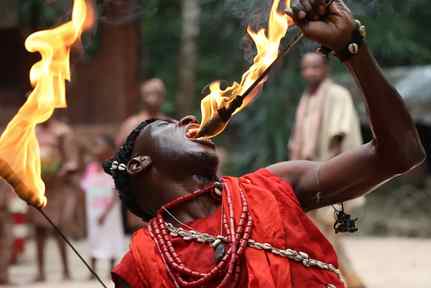 Ọ̀ṣun’s place within this structure is particularly interesting. Known widely as the goddess of rivers, fertility, love, beauty, and diplomacy, Ọ̀ṣun represents a form of power that differs greatly from the fiery authority associated with Ṣàngó. While Ṣàngó is connected to thunder, lightning, and dramatic displays of strength, Ọ̀ṣun’s influence flows quietly through water, healing, persuasion, and emotional wisdom. Yet Yoruba tradition repeatedly shows that these two contrasting forms of power can work together in a meaningful way.
In many narratives, Ọ̀ṣun is remembered as one of the wives who brought calmness and intelligence into the royal household. The palace of Ṣàngó was said to be filled with strong personalities and intense emotions. A king known for his fiery temper naturally created an environment where tension could arise quickly. Under such circumstances, a figure capable of restoring calm and guiding difficult conversations became extremely valuable. Yoruba storytellers often emphasize that Ọ̀ṣun possessed this rare ability.
Ọ̀ṣun as a Voice of Calmness in Ṣàngó’s Palace
Stories about Ṣàngó often describe him as a ruler with tremendous energy and an unpredictable temper. While these qualities contributed to his reputation as a powerful king, they could also create tension within the palace environment.
Within this setting, Ọ̀ṣun is frequently portrayed as a calming presence. Her character is associated with patience and thoughtful communication. When conflicts arose among members of the royal household, she was believed to possess the ability to restore peace through careful words and respectful negotiation. This role shows a wider Yoruba cultural principle: individuals who maintain emotional balance are highly valued because they prevent conflict from escalating into destructive situations.
Wait a bit... Do you know that understanding the Orishas requires more than surface knowledge?
Get a structured and comprehensive eBooks on Orisha Osun, Orisha Oro, Orisha Sango, Orisha Ogun, Orisha Obatala, and Orisha Esu, covering how they are deified, rituals, taboos, festivals, oriki and more. Available individually or in bundles
Her Influence on the King Sango
Yoruba narratives often suggest that Ọ̀ṣun held a special place in Ṣàngó’s heart. Her intelligence and graceful personality made her one of the few people capable of approaching the king without fear.
In moments when Ṣàngó’s anger threatened to produce harsh decisions, Ọ̀ṣun was sometimes described as intervening with gentle advice. Through patience and diplomacy, she could persuade him to reconsider actions that might have harmed his reputation or disturbed the peace of Oyo Kingdom and its environs.
Diplomacy and Emotional Intelligence
Ọ̀ṣun’s role in the palace highlights the importance of diplomacy within Yoruba social life. Rather than confronting challenges with aggression, she relied on persuasion and understanding.
Her success in influencing events within Ṣàngó’s household demonstrates that emotional intelligence can be as powerful as physical strength. Yoruba tradition recognizes that individuals who understand human emotions are capable of shaping outcomes in subtle yet effective ways.
The Real Meaning of Water Within the Marriage
The marriage between Ṣàngó and Ọ̀ṣun also has unique meaning connected to natural elements. Ṣàngó represents thunder, lightning, and fire-like energy from the sky, while Ọ̀ṣun represents flowing water from the earth.
Although these elements appear opposite, they are part of the same natural process. Storms bring rain, and rain feeds rivers. Yoruba storytellers often use this relationship to illustrate the idea that life depends on cooperation between different forces.
Yoruba Herbs, Plants and Medicine Made Simple!
Spiritual knowledge is powerful—but when combined with herbal wisdom, it becomes complete. Check out Common Ailments and Their Natural Cures (preview here), Identification & Properties of Different Plants (see sample), Yoruba proverbs associated with different Herbs (see preview).
With these e-Books, you can treat illnesses naturally. Understand the proverbs behind plants/herbs. Identify plants, roots, barks with confidence.
Influence of the Story on Yoruba Culture
The story of Ọ̀ṣun as one of Ṣàngó’s wives continues to influence Yoruba religious practice and cultural identity. In praise poetry (Oriki) and festival performances, references to their relationship appear as complementary. Devotees sometimes invoke both figures when seeking a balance between protection and emotional stability.
Conclusion
The role of Ọ̀ṣun as one of the wives of exhibits more than a simple marital relationship within Yoruba tradition. It represents the meeting of two powerful yet contrasting forces: the fiery authority of thunder and the gentle wisdom of flowing water.
Within the royal household of Ṣàngó, Ọ̀ṣun’s presence brought diplomacy, balance, and thoughtful counsel. Her influence demonstrates that leadership requires more than strength alone. Wisdom, patience, and the ability to calm conflict are equally essential for maintaining stability.
Learn the general taboos of Orisha Oko in Yoruba c…

Check out the common items used in worshiping Oris…
CONNECT WITH US: