support@yorubalibrary.com
+2348073529208, 07038599574
In the pantheon of Yoruba deities, few figures command as much awe and intrigue as Sango, the Orisha of thunder, lightning, and justice. His story is a powerful blend of historical reality and divine myth, a narrative that pivots on a single phrase: Oba Koso. This title, meaning "The King Did Not Hang," is more than a name; it is a declaration, a controversy, surrounding the legend. 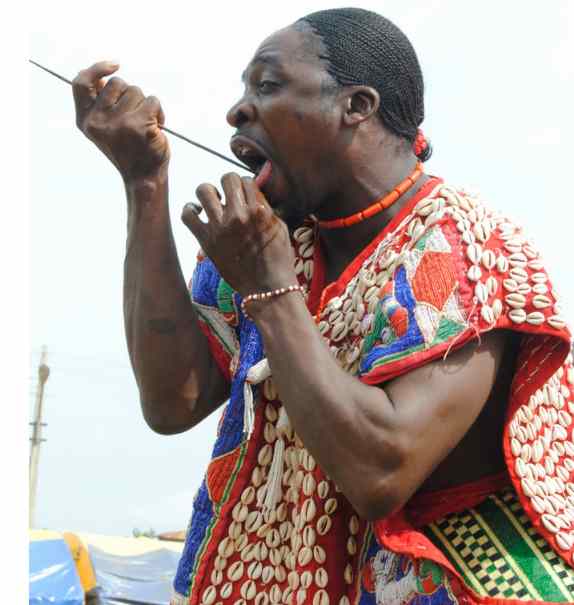 While Sango is venerated across the world, from his heartland in Nigeria to the shores of the Americas, the true origin of this title remains a subject of intense debate, caught between a tale of tragic suicide and a defiant act of political and spiritual reclamation. This article unravels the layers of history, myth, and interpretation to explore why Sango, the formidable Alaafin of the Oyo Empire, is eternally known as Oba Koso.
Unveiling Sango: A Royal Enigma Turned Deity
Before he became an Orisha, Sango was a human king—the third Alaafin of the nascent but powerful Oyo Kingdom, some other accounts suggest he was fourth king. He was a historical figure, a ruler of flesh and blood whose reign left an indelible mark on the Yoruba people. His transition from a mortal monarch to a divine being is one of the most compelling narratives in West African tradition, illustrating the fluid boundary between ancestry and divinity. He embodies the idea that human greatness, passion, and even tragedy can elevate a person to godhood.
The title "Oba Koso" is a paradox. It directly refutes the most widely told story of Sango's demise: that he took his own life by hanging. The phrase is not just a denial but an assertion of continued existence and power. It implies that Sango did not truly die but instead ascended, transforming his earthly end into a celestial beginning.
How everything began as Alaafin: A King of Power and Passion
Sango's rule as the third Alaafin of Oyo (some claimed he was fourth) was characterized by strength, ambition, and a volatile energy that mirrored the thunder he would later command. Succeeding his brother Ajaka, who was perceived as a more pacifist ruler, Sango brought a martial and authoritative style to the throne. His reign was focused on expansion and consolidating the power of the Oyo Kingdom. He was both feared and respected, a monarch whose personality was as dynamic and unpredictable as a storm.
During Sango's era, the Oyo Empire was a formidable military and political force in West Africa. Centered in the capital city of Oyo-Ile, its influence was spreading. The kingdom's strength was built on a skilled cavalry and a complex political structure that Sango actively sought to dominate. His leadership was crucial in establishing Oyo's reputation as a power to be reckoned with, setting the stage for its eventual imperial dominance. The security of the realm was paramount, and Sango's methods were often ruthless and direct.
Sango's Character: Ambition, Sorcery, and a Fiery Temper
Oral traditions paint Sango as a master of charms and sorcery, a king who could breathe fire and summon lightning. This magical prowess was lined with his human ambition and a notoriously short temper. His passion was his greatest asset and his most fatal flaw. This combination of supernatural ability and intense human emotion made him a charismatic but dangerous leader, one whose actions could build an empire or bring it to the brink of chaos in mere seconds.
A king's power is often measured by his alliances, and Sango's were complex. He maintained relationships with neighboring states, including Benin, through both diplomacy and force. His most significant relationships, however, were within his own court and household, particularly with his powerful generals and his three famous wives: Oba, Osun, and Oya. These relationships were sources of both strength and intense conflict, ultimately playing a pivotal role in the events that would define his legacy.
Gbonka and Timi: The Seeds of Conflict within the Oyo Kingdom
Within Sango's court, two warriors of immense power and influence rose to prominence: Gbonka Ebiri and Timi Olofa Ina. Their skills were so great that they began to rival the Alaafin's own authority, becoming a threat to his security and rule. Fearing their ambition, Sango devised a plan to eliminate them by pitting them against each other. This political maneuvering, born of paranoia and a desire to maintain absolute control, would backfire spectacularly and set in motion the chain of events leading to his downfall.
Sango’s plot against Gbonka and Timi failed. Instead of destroying each other, their rivalry culminated in a direct challenge to the Alaafin’s authority. Gbonka, the ultimate victor in their duel, returned to Oyo-Ile not as a humbled servant but as a figure whose power now openly eclipsed the king's. He publicly shamed Sango, demonstrating his superior command of magic. This humiliation, in front of his subjects, was a devastating blow to a king whose identity was built on absolute power and mystical supremacy.
Defeated and disgraced, Sango fled the capital - Oyo Ile. Accompanied by a few loyal followers and wives, he retreated into the wilderness, his reign effectively over. The man who had commanded armies and breathed fire was now an exile, stripped of his power and his dignity. His journey led him to a place called Koso, near the old capital of Oyo-Ile, in what is today part of Ogun State. It was here, the legendary name came from.
According to the most popular oral tradition, overwhelmed by grief and shame, Sango took his own life. He climbed an Ayan tree (African satinwood) and hanged himself. This act, the ultimate admission of defeat for a proud king, marked the end of his mortal life. His enemies rejoiced, mocking his followers by proclaiming, "Oba so," meaning "The king has hanged." This phrase was meant to seal his legacy in shame.
Wait a bit... Do you know that understanding the Orishas requires more than surface knowledge?
Get a structured and comprehensive eBooks on Orisha Osun, Orisha Oro, Orisha Sango, Orisha Ogun, Orisha Obatala, and Orisha Esu, covering how they are deified, rituals, taboos, festivals, oriki and more. Available individually or in bundles
The "King Did Not Hang" Interpretation: A Public Relations Coup?
One of the most compelling modern interpretations views the "Oba Koso" narrative as a masterful act of political public relations. In this view, Sango’s followers, facing the utter collapse of their political faction after his death, engineered a new narrative. By deifying him and claiming he ascended rather than died in shame, they transformed a political catastrophe into a religious triumph. This allowed them to maintain influence and create a powerful religious cult around his name that would endure for centuries.
The Role of Oral Tradition and Praise Poetry (Oriki) in Shaping Narratives
In Yoruba culture, history is preserved and shaped through oral traditions, particularly praise poetry known as Oriki. These poems are not static historical records; they are dynamic performances meant to glorify an individual's lineage and accomplishments. The story of Sango's ascension was undoubtedly magnified and embellished through Oriki. The poets and storytellers, in their desire to honor the deified king, would have emphasized his power and divinity while downplaying the more tragic and human aspects of his end, cementing the "Oba Koso" narrative in the collective consciousness.
Yoruba Herbs, Plants and Medicine Made Simple!
Spiritual knowledge is powerful—but when combined with herbal wisdom, it becomes complete. Check out Common Ailments and Their Natural Cures (preview here), Identification & Properties of Different Plants (see sample), Yoruba proverbs associated with different Herbs (see preview).
With these e-Books, you can treat illnesses naturally. Understand the proverbs behind plants/herbs. Identify plants, roots, barks with confidence.
How Marital Strife and Rivalry Contributed to Sango's Downfall (or Ascension)
The constant strife and jealousy among his powerful wives created a volatile and unstable environment in Sango's palace. This domestic turmoil mirrored and likely exacerbated the political instability he faced from his generals. The competing ambitions within his own home distracted him and may have contributed to the mis-calculations that led to his confrontation with Gbonka, making his personal life a direct catalyst for his public downfall.
The Deification of Sango: From Alaafin to Orisha of Thunder
Sango's ascension from a human king to an Orisha marks the ultimate success of the "Oba Koso" narrative. No longer just a historical Alaafin, he became a central deity in the Yoruba pantheon, worshipped for his control over fire, thunder, and divine justice. This deification provided his followers with a powerful, enduring spiritual figure and solidified the legitimacy of the Oyo royal lineage through divine association. The cult of Sango spread far beyond the borders of the Oyo Empire, carried across the Atlantic during the slave trade, where he became known as Changó in Cuba and Xangô in Brazil. The global recognition of his legacy continues, with the Sango festival being recognized by UNESCO as an Intangible Cultural Heritage in 2023. This celebration underscores his lasting cultural and spiritual impact.
Learn the general taboos of Orisha Oko in Yoruba c…

Check out the common items used in worshiping Oris…
CONNECT WITH US: