support@yorubalibrary.com
+2348073529208, 07038599574
In Yoruba religious thought, devotion is never separated from discipline. To serve a divinity is to align one’s conduct with the character and expectations of that spiritual force. Ogun, the divinity of iron, war, labor, technology, and oath enforcement, is widely famous as one of the most demanding Orisha in terms of ethical conduct. His devotees are not merely worshippers; they are individuals who place themselves under a system of some restrictions known as taboos (Eewo). Taboos in Yoruba tradition are not arbitrary prohibitions. They function as moral boundaries designed to preserve spiritual balance and prevent conflict between human behavior and divine temperament. Because Ogun represents precision, truth, force, and uncompromising justice, his devotees are expected to embody those same qualities. Violations are believed to attract spiritual consequence, not as superstition but as disruption of covenant. The study of Ogun’s taboos reveals a great deal about Yoruba metaphysics. It shows how religion functioned not only as ritual practice but also as ethical formation.
Prohibition of Falsehood and Dishonesty
One of the most widely recognized taboos associated with Ogun is lying, particularly under oath. Ogun is traditionally invoked as witness in serious declarations, and his identity as guardian of iron makes him symbolically intolerant of distortion. Iron cuts cleanly; it does not twist or manipulate. Devotees are therefore expected to portray themselves in clarity of speech and conduct.
A devotee who knowingly lies, especially after invoking Ogun’s name, is believed to expose themselves to spiritual retaliation. Oral traditions frequently recount warnings that Ogun does not delay punishment for deceit (Ara Ogun kan go-go-go). Whether interpreted spiritually or sociologically, the fear of consequence reinforces a strong ethic of truthfulness among adherents.
This taboo extends beyond courtroom-style oath-taking. Everyday dishonesty, betrayal, and manipulation are considered incompatible with Ogun’s temperament. The devotee must cultivate straightforwardness, even when truth is uncomfortable.
Sexual and Ritual Purity Before Sacred Engagement
In many traditional communities, devotees of Ogun are expected to observe periods of abstinence before major rituals, festivals, or sacrificial ceremonies. Sexual activity shortly before approaching Ogun’s shrine may be restricted depending on local tradition. The rationale lies in ritual focus and spiritual preparation rather than moral condemnation of sexuality itself.
Ogun depicts concentrated force. Ritual engagement requires mental and physical discipline. Abstinence becomes a means of preserving that focus. It signals respect for the seriousness of the ceremony and acknowledgment of Ogun’s intense presence.
Additionally, impurity in the sense of uncontrolled behavior, drunkenness during sacred rites, or disrespectful conduct near the shrine is often forbidden. The shrine environment is treated as a controlled space where iron’s spiritual power is active.
Wait a bit... Do you know that understanding the Orishas requires more than surface knowledge?
Get a structured and comprehensive eBooks on Orisha Osun, Orisha Oro, Orisha Sango, Orisha Ogun, Orisha Obatala, and Orisha Esu, covering how they are deified, rituals, taboos, festivals, oriki and more. Available individually or in bundles
Dietary and Sacrificial Regulations
Certain animals and foods are associated either positively or negatively with Ogun depending on regional tradition. While the dog is historically prominent as a sacrificial animal, devotees may be restricted from consuming specific offerings reserved exclusively for ritual purposes.
In some communities, a devotee who has taken particular vows may be prohibited from eating dog meat outside ritual context, reinforcing the sacred status of the animal in relation to Ogun. The prohibition distinguishes ordinary consumption from consecrated offering.
Palm fronds (Màrìwò), iron implements, and ritual objects connected to Ogun are treated with strict respect. Stepping over them, mishandling them, or placing them in unclean locations may be considered taboo. These regulations preserve symbolic hierarchy and prevent casual treatment of sacred materials.
Avoidance of Cowardice and Moral Weakness
Ogun is celebrated in oral poetry as fearless and resolute. Devotees are therefore discouraged from cowardice, betrayal in warfare or conflict, and failure to defend communal truth. While not framed as a legalistic prohibition, this expectation functions as a moral taboo.
Historically, warriors who claimed allegiance to Ogun were expected to uphold bravery. Blacksmiths and hunters were required to demonstrate competence and steadiness. Weakness of character contradicted Ogun’s identity. This does not mean recklessness is encouraged. Rather, it shows an ethic of courage under pressure. Devotees are to confront problems directly rather than avoid responsibility.
Prohibition Against Disrespecting Iron
Iron is not a neutral material in Yoruba religious imagination; it is Ogun’s embodiment. Disrespect toward iron tools, weapons, or implements associated with Ogun may be interpreted as disrespect toward the deity himself.
Throwing iron objects carelessly, using them for unjust harm, or allowing them to rust through negligence can be considered violations. Traditional blacksmith guilds maintained strict ritual codes governing the forging and handling of iron. Because iron enabled agriculture, warfare, and technological development, its sanctity is crucial. To misuse iron was not merely technical error but spiritual offense.
Yoruba Herbs, Plants and Medicine Made Simple!
Spiritual knowledge is powerful—but when combined with herbal wisdom, it becomes complete. Check out Common Ailments and Their Natural Cures (preview here), Identification & Properties of Different Plants (see sample), Yoruba proverbs associated with different Herbs (see preview).
With these e-Books, you can treat illnesses naturally. Understand the proverbs behind plants/herbs. Identify plants, roots, barks with confidence.
Regional Variation and Evolving Practice
It is important to recognize that taboos are not uniform across all Yoruba communities. Ogun worship in Ekiti may differ in detail from practice in Ijebu or Oyo. Some restrictions are lineage-specific, while others are tied to particular priestly traditions.
Modernization, religious pluralism, and urban life have also re-shaped observance. Some taboos remain symbolically acknowledged even when literal enforcement has softened. Others continue strongly in rural or shrine-centered communities.
Conclusion
The taboos of Ogun devotees showcases that his worship is grounded in moral discipline as much as ritual practice. Prohibitions against falsehood, impurity before sacred rites, disrespect for iron, cowardice, and misuse of ritual objects reveals the personality of the deity himself.
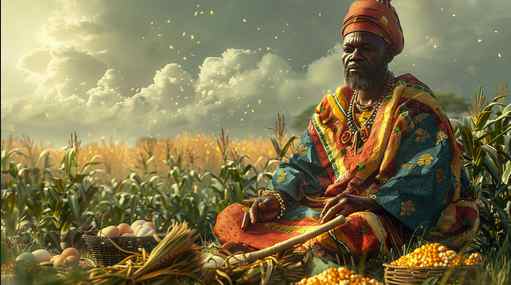
Learn the general taboos of Orisha Oko in Yoruba c…

Check out the common items used in worshiping Oris…
CONNECT WITH US: