support@yorubalibrary.com
+2348073529208, 07038599574
In Yoruba religious thought, speech is not a casual instrument. Words are understood to carry force, consequence, and spiritual weight. An oath is therefore not merely a statement of promise; it is a binding declaration made before a higher authority. Among the Yoruba, one of the most feared and respected forms of oath-taking is Ìbúra Ogun — swearing before Ogun, the divinity of iron, discipline, and uncompromising justice.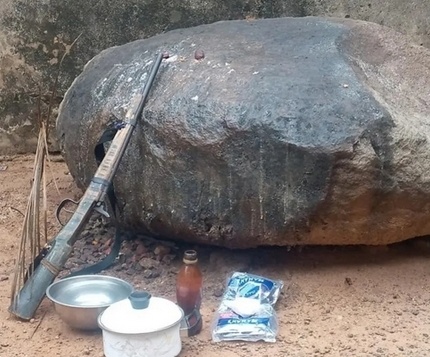 Ogun’s association with oath-taking emerges from his character within oral tradition. He is direct, forceful, and intolerant of falsehood. While other divinities may embody fertility, diplomacy, or healing, Ogun embodies enforcement. Iron cuts without negotiation. Iron does not bend easily. These qualities define the moral characters attached to him. When an individual swears by Ogun, the implication is that deceit will meet swift consequence.
Historically, Ìbúra Ogun functioned as a judicial and social instrument within Yoruba communities. In disputes where evidence was uncertain, where testimony conflicted, or where trust had been broken, invoking Ogun placed the matter beyond human arbitration and under divine surveillance. The oath was feared not because of public punishment but because of belief in Ogun’s invisible enforcement.
The Theological Basis of Ìbúra Ogun
The authority of Ogun in oath-taking rests on his identity as guardian of iron and path opener. Iron in Yoruba thought represents both creation and destruction. It clears land for farming, forges tools for building, and produces weapons for war. The same instrument that constructs can also punish. This dual capacity gives Ogun moral gravity.
When a person swears before Ogun, the sign is clear. Just as iron cuts through physical matter, Ogun is believed to cut through lies. The oath becomes a metaphysical exposure. Falsehood cannot hide under his authority. The individual places their fate under the scrutiny of a deity whose temperament is known to be decisive.
In traditional settings, Ìbúra Ogun often involved physical contact with iron objects such as machetes, knives, or ritual implements associated with Ogun’s shrine. The tactile connection reinforced the seriousness of the act. The iron object was not merely symbolic; it represented Ogun’s active presence in the moment of declaration.
Ìbúra Ogun in Traditional Yoruba Judicial Practice
Before colonial legal systems were imposed, Yoruba societies maintained structured mechanisms for resolving disputes. Elders, chiefs, and lineage heads presided over conflicts. However, when testimony remained contradictory, divine arbitration could be invoked. Ìbúra Ogun became one of the most serious forms of such arbitration.
In cases involving land disputes, accusations of theft, adultery, or betrayal, individuals might be asked whether they were willing to swear by Ogun. Acceptance signified confidence in one’s innocence. Refusal often implied fear of divine consequence. Thus, the oath functioned as both spiritual mechanism and psychological test.
The strength of Ìbúra Ogun lay in communal belief. Social order depended not only on physical enforcement but on shared spiritual assumptions. If members of the community believed Ogun punished deceit, then fear of divine retaliation discouraged perjury. The oath reinforced ethical conduct beyond the reach of immediate human supervision. Even in regions influenced heavily by Islam or Christianity, older generations sometimes continued to recognize the gravity of swearing by Ogun.
Wait a bit... Do you know that understanding the Orishas requires more than surface knowledge?
Get a structured and comprehensive eBooks on Orisha Osun, Orisha Oro, Orisha Sango, Orisha Ogun, Orisha Obatala, and Orisha Esu, covering how they are deified, rituals, taboos, festivals, oriki and more. Available individually or in bundles
Linguistic Dimensions of Ìbúra Ogun
From a linguistic perspective, the phrase Ìbúra Ogun combines “ìbúra,” meaning oath or solemn swearing, with Ogun’s name functioning as divine witness and enforcer. The construction implies more than calling upon a name; it establishes juridical alignment with a spiritual authority.
In traditional expressions, phrases such as “Mo búra ní orúkọ Ogun” (I swear in the name of Ogun) or “Ogun ngbo” (Ogun bears me witness) illustrate the conditional structure embedded in oath formulas. The speaker binds themselves to consequence.
The conditional curse element is important. Yoruba oath-taking often includes invocation of self-punishment should the statement prove false. By invoking Ogun in this way, the speaker acknowledges his role as executor of that punishment.
Fear, Morality, and Social Control
The power of Ìbúra Ogun extends beyond ritual practice into moral psychology. Fear of supernatural enforcement created a deterrent effect. In communities where divine retribution was assumed to be inevitable, false swearing carried existential risk.
Ogun’s reputation for swift reaction intensified this deterrent effect. Unlike divinities associated with patience or gradual consequence, Ogun’s temperament in oral tradition is immediate and fiery. This reputation made him particularly suitable as an oath deity.
However, the system was not solely fear-based. It also reinforced communal trust. When individuals willingly swore by Ogun and remained unharmed, their credibility strengthened. The oath restored broken confidence and allowed social relationships to continue. Thus, Ìbúra Ogun operated simultaneously as religious act, judicial tool, and mechanism of social cohesion.
Yoruba Herbs, Plants and Medicine Made Simple!
Spiritual knowledge is powerful—but when combined with herbal wisdom, it becomes complete. Check out Common Ailments and Their Natural Cures (preview here), Identification & Properties of Different Plants (see sample), Yoruba proverbs associated with different Herbs (see preview).
With these e-Books, you can treat illnesses naturally. Understand the proverbs behind plants/herbs. Identify plants, roots, barks with confidence.
Transformation in Contemporary Context
Modern legal systems, religious conversion, and urbanization have transformed how oath-taking functions in Yoruba society. Today, formal courts administer secular or religious oaths based on constitutional frameworks. However, cultural memory of Ìbúra Ogun persists.
In some traditional communities, shrines dedicated to Ogun still serve as locations for oath-taking in land or chieftaincy disputes. In other contexts, the phrase survives metaphorically in everyday speech to emphasize seriousness.
Conclusion
Ìbúra Ogun represents one of the clearest expressions of Ogun’s identity as enforcer of truth and guardian of moral order. This is based on fact of symbolism of iron, strengthened by communal belief, and embedded in judicial practice, the oath placed human speech under divine surveillance. Swearing before Ogun was never casual. It invoked consequence, demanded sincerity, and reinforced ethical discipline.

Learn the general taboos of Orisha Oko in Yoruba c…

Check out the common items used in worshiping Oris…
CONNECT WITH US: