support@yorubalibrary.com
+2348073529208, 07038599574
In Yorùbá spiritual practice, Èsù occupies a unique and complex position. As the divine messenger, guardian of thresholds, and regulator of moral consequence, his worship comes with specific ritual behaviours and taboos. These rules are not arbitrary—they shows years of theological development, ethical instruction, and spiritual conformity. Observing taboos ensures unity between humans and the spiritual world, protects practitioners from misfortune, and maintains the potency of offerings and prayers.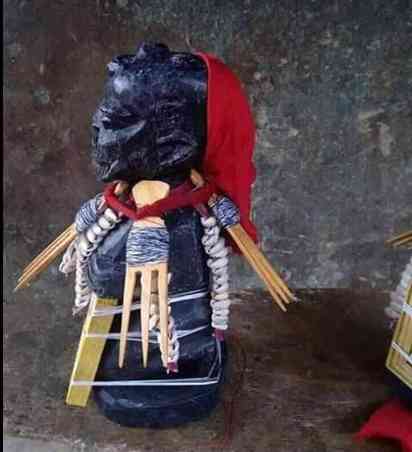 Understanding these practices is essential for anyone seeking to engage with Yorùbá religion respectfully. Ritual behaviour around Èsù is highly structured because he governs both the flow of Àṣẹ and the reception of sacrifices. Ignoring protocol can have consequences, ranging from ineffective prayers to spiritual imbalance. These taboos and behaviours demonstrate the meticulous care the Yorùbá take in ritual practice, showcasing a worldview where the sacred and ordinary are connected.
Common Taboos Related to Èsù
1. Do Not Substitute Offerings
One of the most important taboos is substituting materials in ritual offerings. For instance:
• Red palm oil (ẹ̀pò) is accepted, while palm kernel oil (adì) is forbidden.
• Specific foods such as cooked yams, black beans, or cornmeal may be prescribed; replacing them with unrelated items is prohibited.
2. Do Not Ignore the Order of Ritual
Èsù must always be acknowledged first in any ritual sequence. Ignoring him or delaying his invocation is considered a serious breach. This is linked to his role as messenger and regulator:
• He ensures offerings reach their intended target.
• He mediates consequences if ritual order is broken.
3. Avoid Disrespect in Speech or Gesture
Even casual disrespect, joking inappropriately, or stepping over a shrine can be considered offensive. Yorùbá belief emphasizes:
• Verbal respect – using proper praise names and titles.
• Physical respect – not touching sacred objects carelessly.
4. Do Not Attempt to Trick or Deceive
Èsù is the divine enforcer of consequence. Attempting to deceive him, cheat in offerings, or misrepresent intention is taboo. Traditional warnings state: “Èsù knows what is hidden; trickery returns to the sender.” This goes with the principle expressed in oríkì: “Aṣeburúkú Serere”.
Wait a bit... Do you know that understanding the Orishas requires more than surface knowledge?
Get a structured and comprehensive eBooks on Orisha Osun, Orisha Oro, Orisha Sango, Orisha Ogun, Orisha Obatala, and Orisha Esu, covering how they are deified, rituals, taboos, festivals, oriki and more. Available individually or in bundles
Ritual Behaviours Honouring Èsù
1. Offering Placement
Èsù’s offerings are carefully placed at gates, crossroads, or shrine corners. The placement is imperative:
• Gates – thresholds of the household
• Crossroads – points of decision and destiny
• Markets – hubs of social and commercial exchange
2. Offering First and Correctly
Before any other Òrìṣà or ritual action, offerings are presented to Èsù. Common items include:
• Red palm oil
• Kola nuts
• Cooked yams or black beans
• Cowries or ritual objects in black and red
• Rooster (Akuko Adiye)
3. Recitation of Oríkì
Devotees often recite oríkì, including lines such as “Aṣeburúkú Serere”, acknowledging his dual power. Even when playful or paradoxical, this verbal homage is structured and respectful.
4. Physical Conduct
• Bowing or lowering posture when approaching a shrine
• Avoiding direct confrontation with the shrine, especially when making offerings
• Careful handling of ritual tools and objects
Yoruba Herbs, Plants and Medicine Made Simple!
Spiritual knowledge is powerful—but when combined with herbal wisdom, it becomes complete. Check out Common Ailments and Their Natural Cures (preview here), Identification & Properties of Different Plants (see sample), Yoruba proverbs associated with different Herbs (see preview).
With these e-Books, you can treat illnesses naturally. Understand the proverbs behind plants/herbs. Identify plants, roots, barks with confidence.
Why These Taboos and Behaviours Matter
The taboos and prescribed behaviours surrounding Èsù do more than enforce ritual correctness—they:
• Maintain spiritual balance between humans and divine forces
• Preserve effectiveness of prayer and sacrifice
• Uphold ethical accountability in daily life
• Reinforce cultural memory and tradition across ages.
Èsù’s authority ensures that words, offerings, and actions carry the intended spiritual weight. Observing taboos and ritual protocol is therefore a matter of moral integrity.
Conclusion
Taboos and ritual behaviours related to Èsù are central to Yorùbá religion. They exhibits a nuanced understanding of spiritual authority, moral responsibility, and sacred order. From proper offerings to respectful conduct, each practice ensures that Èsù can effectively govern Àṣẹ and mediate between humans and the divine.
Learn the general taboos of Orisha Oko in Yoruba c…
Check out the common items used in worshiping Oris…
CONNECT WITH US: