support@yorubalibrary.com
+2348073529208, 07038599574
In Yorubaland, the practice of men braiding their hair has a unique sign and closely linked to spiritual roles. Unlike common fashion trends, braided hair among certain men is a distinctive mark of the priests of Sango, the god of thunder. This hairstyle is not simply about appearance; it signifies a sacred identity and connection to traditional religious duties.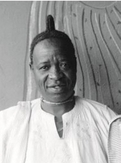
The braids are an important part of the priests' ceremonial and cultural expression, setting them apart from everyday men. This tradition shows centuries of Yoruba beliefs, where specific looks carry significant meaning tied to spirituality and social roles.
Understanding why male priests braid their hair like women requires recognizing that in this context, the style transcends gender norms. It is a purposeful symbol linked to the power and presence of Sango within the community and his worshippers.
Origins And Significance Of The Braid Of Sango
The braid worn by male priests of Sango carries cultural and religious meanings. It links ancient Yoruba traditions with spiritual identity and social roles. Sango, the Yoruba god of thunder and lightning, has been a central figure in Yorubaland for centuries. Worship of Sango dates back to pre-colonial times when he was revered as a powerful ruler and later deified. His followers, especially priests, maintained distinct practices to honor him.
Sango’s priests adopted braiding as a cultural marker, distinguishing themselves from others. The braided hair shows their exclusive service to Sango. This style was passed down through generations to maintain continuity of worship and authority. The braids also aligned the priests with traditional aesthetics linked to divine power and protection.
Role Of Male Priests In Sango Rituals
Male priests serve as intermediaries between the community and Sango, the god of thunder. They perform rituals, sacrifices, and ceremonies aimed at invoking protection, justice, and power. Their presence is vital in preserving the religious practices.
These priests often embody both masculine and feminine traits symbolically. This duality in their role shows the connection with Sango’s complex identity, blending strength with transformation. The priests are custodians of sacred knowledge, with their appearance reinforcing their spiritual authority.
Hair Braiding As A Ritual Practice
Braiding hair is a distinct ritual marker for Sango priests. Unlike ordinary hairstyles, their braids serve as visual symbols of their religious office and commitment. The styles often mimic feminine hair patterns, which has meaning in the context of their cult.
The act of braiding is not merely decorative but a spiritual expression tied to Sango’s mythos. It aligns the male priests with the deity’s power and reflects ritual purity. These hairstyles set them apart from other men in the community and signify their sacred role.
Wait a bit... Do you know that understanding the Orishas requires more than surface knowledge?
Get a structured and comprehensive eBooks on Orisha Osun, Orisha Oro, Orisha Sango, Orisha Ogun, Orisha Obatala, and Orisha Esu, covering how they are deified, rituals, taboos, festivals, oriki and more. Available individually or in bundles
Braids In Yoruba Society And Spiritual Identity
In Yoruba culture, hairstyles serve as more than grooming; they depicts social roles and spiritual connections. For male priests of Sango, the god of thunder, braiding hair like women is a sacred act. This style is reserved exclusively for them, marking their religious status and spiritual authority.
The braids connect the priests visually to Sango’s power and presence. It is not simply a personal choice but a ritualistic expression that links their physical appearance with divine identity.
Transformation And Acceptance Of Gendered Practices
As cultural attitudes evolve, the hair braiding by Sango priests challenges fixed ideas about gender and appearance. The tradition blends male roles with elements associated with femininity without diminishing masculinity or spiritual prestige.
This transformation shows adaptability, where gendered practices like hair braiding are understood through the lens of religion rather than binary gender norms. It highlights how Yoruba spirituality uses appearance to transcend social conventions, allowing the priests to embody complex identities tied to their divine function.
Yoruba Herbs, Plants and Medicine Made Simple!
Spiritual knowledge is powerful—but when combined with herbal wisdom, it becomes complete. Check out Common Ailments and Their Natural Cures (preview here), Identification & Properties of Different Plants (see sample), Yoruba proverbs associated with different Herbs (see preview).
With these e-Books, you can treat illnesses naturally. Understand the proverbs behind plants/herbs. Identify plants, roots, barks with confidence.
Modern Adaptations Of Priestly Braids
In contemporary settings, the braids worn by Sango priests are often maintained as a key identifier of their spiritual role. However, some communities show flexibility in style length or adornment to adapt to current lifestyles.
Learn the general taboos of Orisha Oko in Yoruba c…

Check out the common items used in worshiping Oris…
CONNECT WITH US: