support@yorubalibrary.com
+2348073529208, 07038599574
Among the many symbols associated with Ṣàngó, the Alaafin of Oyo turned Orisha of thunder and lightning, his sacred colours—red and white—stand out as the most powerful and instantly recognizable. To the casual observer, these may appear as mere decorative choices in shrines, garments, or festival attire. To devotees, however, these colours are far more than aesthetic; they carry spiritual, moral, and philosophical significance.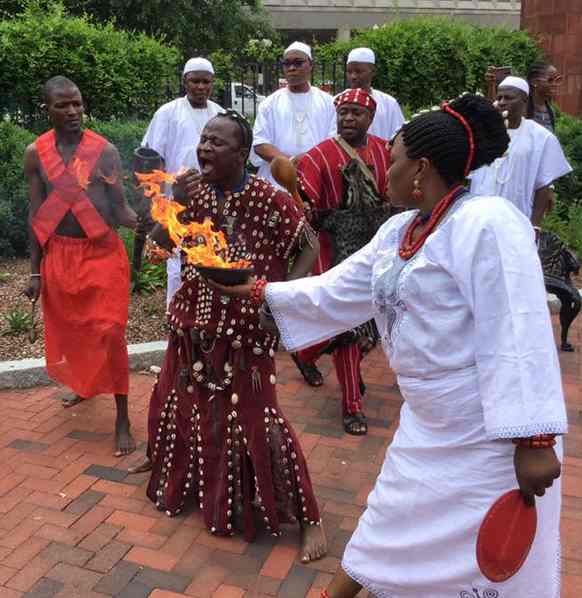 Red and white are laced into Ṣàngó’s identity as a deity of authority, justice, fire, and energy. Each colour embodies different aspects of his power and character, showing his dual nature: the fierce and commanding side, and the just, balanced, and spiritual side. Understanding these sacred colours allows devotees and observers alike to grasp how Yoruba thought conveys complex spiritual truths through symbolism, ritual, and cultural practice.
Red: The Colour of Fire, Power, and Authority
Red is the first colour associated with Ṣàngó, representing his dynamic and transformative energy. It speaks to his fiery temper, decisive action, and commanding presence. When devotees wear red or display red in shrines, it is not only an act of devotion—it is an invocation of Ṣàngó’s energy and protection.
Red also embodies the following dimensions:
• Strength and Courage:
Red calls on Ṣàngó’s boldness and martial prowess, reminding followers to face challenges with determination and self-confidence.
• Justice and Judgment:
As the Orisha of thunder, red symbolizes the authority to correct wrongs swiftly and fairly, much like lightning striking with precision.
• Vitality and Passion:
Red represents life energy, intensity, and the fiery force that drives change, inspiring devotees to act with focus and purpose.
In festivals and rituals, red cloths, beads, and ceremonial accessories signal that Ṣàngó’s presence is active and potent. They are a visual reminder of his capacity to enforce order, protect his followers, and respond decisively to moral imbalance.
White: The Colour of Purity, Balance, and Spiritual Wisdom
White complements red, creating a symbolic duality. While red is power, white represents purity, clarity, and balance. It tempers the fierceness of red, showing that Ṣàngó’s authority is not chaotic but guided by justice and spiritual insight.
White embodies:
1) Spiritual Authority: White signals divine insight and moral authority. It conveys that Ṣàngó’s power is righteous and tempered by cosmic order.
2) Peace and Harmony: White brings calmness, reminding devotees that strength must be balanced with fairness, patience, and wisdom.
3) Protection and Clarity: White is also a protective colour, often used in shrines and rituals to purify spaces and guide followers in decision-making.
The presence of white ensures that the energy of red is directed purposefully. It conveys that Ṣàngó is not just the Orisha of raw power but also a guardian of moral and spiritual order.
Wait a bit... Do you know that understanding the Orishas requires more than surface knowledge?
Get a structured and comprehensive eBooks on Orisha Osun, Orisha Oro, Orisha Sango, Orisha Ogun, Orisha Obatala, and Orisha Esu, covering how they are deified, rituals, taboos, festivals, oriki and more. Available individually or in bundles
The Interplay of Red and White in Symbolism
The combination of red and white creates a dynamic equilibrium in Ṣàngó worship. It is a visual representation of his dual qualities:
1) Action and Reflection: Red motivates swift action, while white calls for thoughtful reflection.
2) Force and Justice: The fierceness of red is moderated by the fairness of white.
3) Life and Spirit: Red expresses energy and vitality, white conveys purity and guidance.
This duality is often seen in the beads, garments, altar cloths, and festival decorations used by devotees. The colours work together to remind followers that true leadership and spiritual power require both intensity and balance.
Usage in Rituals, Festivals, and Daily Devotion
Red and white appear consistently across rituals, celebrations, and devotional practices:
1) Beads and Attire: Initiates and devotees wear red and white beads to signify their connection to Ṣàngó, showing readiness to embody his principles.
2) Shrine Decorations: Altars are adorned with red and white cloths, candles, and objects to invite his presence and protection.
3) Ceremonial Drumming and Dance: During festivals, dancers may wear red and white costumes, combining colour, movement, and rhythm to reflect Ṣàngó’s fiery energy tempered by justice.
4) Offerings: Foods, drinks, and objects offered to Ṣàngó are often presented on red or white cloths, reinforcing symbolic alignment with his essence.
Yoruba Herbs, Plants and Medicine Made Simple!
Spiritual knowledge is powerful—but when combined with herbal wisdom, it becomes complete. Check out Common Ailments and Their Natural Cures (preview here), Identification & Properties of Different Plants (see sample), Yoruba proverbs associated with different Herbs (see preview).
With these e-Books, you can treat illnesses naturally. Understand the proverbs behind plants/herbs. Identify plants, roots, barks with confidence.
Conclusion
The sacred colours of Ṣàngó—red and white—are far more than visual identifiers. They are a powerful symbolic language, conveying his authority, justice, energy, and spiritual wisdom. Red embodies the fire, passion, and decisive power of the Orisha, while white tempers it with purity, balance, and moral guidance. Together, they form a complete picture of Ṣàngó’s character and teachings, guiding devotees to embody strength with fairness, courage with wisdom, and action.
Learn the general taboos of Orisha Oko in Yoruba c…

Check out the common items used in worshiping Oris…
CONNECT WITH US: