support@yorubalibrary.com
+2348073529208, 07038599574
Edun Ara popularly known as “the thunder stone” — is one of those objects that makes people stop and ask a question. Is it a stone? A sign? A tool? Or what exactly is it in Yoruba context? Well, for followers of Sàngó, Edun Ara is much more: a living sign of power, a witness to a thunderbolt, and a focused point for justice and protection. This article brings together traditional accounts, shrine practice, and present-day meanings to explain why Edun Ara matters to Sàngó devotees (Awon Olusin Sango or Adosu Sango), how it is found and cared for, and what it means in ritual life today.
What is Edun Ara?
Edun Àrá is commonly called the thunderstone or lightning stone. Practitioners say these are stones associated with lightning strikes or stones gathered and consecrated for Sàngó. They are kept in Sàngó shrines and treated as sacred objects that carry the deity’s force – i.e Sango.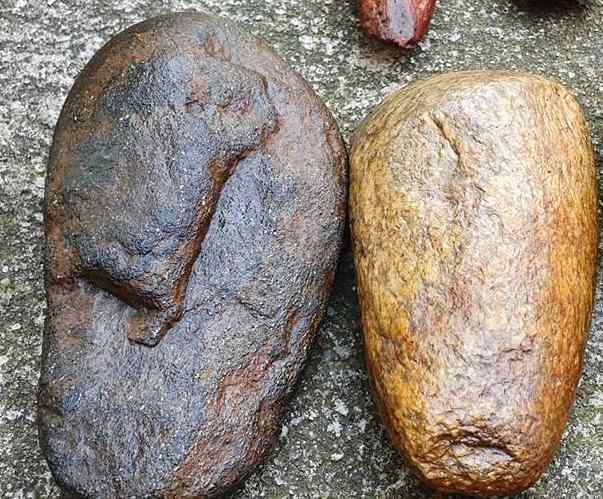 Many oral histories link Edun Ara to events where lightning left a mark on the land. In older accounts and shrine lore, these stones are either found where lightning struck or are ancient objects later claimed and blessed by Sàngó priests. Because Sàngó is historically remembered as a king and a storm figure, objects connected to lightning naturally became part of his material worship.
How Sàngó shrines use Edun Ara
In practice, Edun Ara is stored in containers inside the shrine — often in a calabash or placed upon an inverted mortar or pedestal made for Sàngó objects. It is treated with special offerings (irogbe, orogbo, and other shrine-specific rites) and consulted during rites for protection, justice, or to settle disputes. The presence of Edun Ara in a shrine announces Sàngó’s attention and authority.
Beyond physical power, Edun Ara functions as a sign of Sàngó’s values — firmness, prompt response to wrong-doing, and the swift arrival of consequences when laws or morals are broken. Communities have historically appealed to Sàngó and his stones when they needed decisive action: to protect an innocent, to punish a grave wrong, or to reclaim stolen honour.
The festival and public display
During traditional Sàngó festivals and ceremonies, items connected to lightning — including Edun Ara — are shown or ritually acknowledged. These moments reinforce communal memory of Sàngó’s role as a public force, and they renew the stone’s active role in shrine life for another year. Recent reports of Sàngó festivals show how shrine items and elegun practice still anchor community recognition of Sàngó’s power.
Wait a bit... Do you know that understanding the Orishas requires more than surface knowledge?
Get a structured and comprehensive eBooks on Orisha Osun, Orisha Oro, Orisha Sango, Orisha Ogun, Orisha Obatala, and Orisha Esu, covering how they are deified, rituals, taboos, festivals, oriki and more. Available individually or in bundles
Physical characteristics and sourcing
Edun Ara vary in size and shape. Some shrine keepers describe them as smooth, heavy, and often dark; others are fragments from larger finds. Because Edun Ara are powerful symbols, they attract buyers and sellers.
Care, offerings and everyday rules for devotees
When Edun Ara is present in a shrine, specific rules guide its care: regular offerings, cleansing rites after major storms, and restricted handling by initiated priests. In some places the stone is never moved except during prescribed rites. For household devotees, a small, properly blessed token may be kept, but full thunderstones usually remain with the shrine elders. Respect for local practice is essential: what is acceptable in one town may be taboo in another. This is why Yoruba people say a proverb that, bi a se n se ni ibi yii, eewo ibomiran ni
Modern meanings and personal devotion
For many modern followers, Edun Ara is both a link to history and a present resource. People bring requests for protection, truth, career justice and the removal of envy. To younger devotees who meet Sàngó through festival pageants, the stone becomes a focal point to connect with the older, lived shrine practice — but this connection only becomes clear when elders and priests explain the rules and stories around it.
Yoruba Herbs, Plants and Medicine Made Simple!
Spiritual knowledge is powerful—but when combined with herbal wisdom, it becomes complete. Check out Common Ailments and Their Natural Cures (preview here), Identification & Properties of Different Plants (see sample), Yoruba proverbs associated with different Herbs (see preview).
With these e-Books, you can treat illnesses naturally. Understand the proverbs behind plants/herbs. Identify plants, roots, barks with confidence.
Conclusion
Edun Ara is a clear example of how material items carry and shape religious meaning. As a thunderstone associated with Sàngó, it binds the force of storms to social values — protection, immediate response to harm, and the restored order. Respect for local knowledge, shrine practice and the stories that identify a stone as sacred is what keeps Edun Ara more than an object: it makes it a living emblem of Sàngó’s presence.
Learn the general taboos of Orisha Oko in Yoruba c…
Check out the common items used in worshiping Oris…
CONNECT WITH US: