support@yorubalibrary.com
+2348073529208, 07038599574
In many parts of the world, harvest is treated as an economic milestone—a period of gathering, storing, and preparing for the future. But within Yoruba society, the harvest of yam has a meaning that goes far beyond food. It is not simply about abundance; it is about order, identity, morality, and continuity. The New Yam Festival, known in some traditions as Odún Ìjesu Tuntun, is one of the clearest expressions of how agriculture transforms into culture and culture into social structure.
Yam is not just a crop in Yoruba land—it is much more. Before the arrival of modern food systems, yam represented strength, wealth, and survival. A man’s ability to cultivate yam was directly tied to his status in the community. A household’s yam barn shows not only its economic standing but also its discipline, labor, and moral conformity with the forces that govern the land. In this sense, yam was never just eaten—it was respected, measured, and socially interpreted.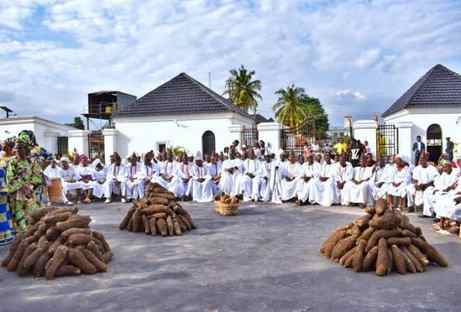 This is where the New Yam Festival takes on its wider meaning. It is not merely a celebration of the first harvest; it is a ritualized reset of society. No one eats the new yam until the proper rites are performed. At the center of this acknowledgment is Orisha Oko, the spiritual authority over cultivated land, fertility, and the moral conditions that make harvest possible.
The festival creates a pause between production and consumption. It forces restraint in a moment of abundance. This restraint is highly sociological—it teaches that access to resources is not purely individual but regulated by collective values. Even the wealthiest farmer must wait. Even the most powerful individual must submit to communal timing. In this way, the New Yam Festival depicts equality, discipline, and shared identity.
Beyond its agricultural importance, the festival serves as a mirror of social relationships. Families return home, lineages reconnect, and communities gather in ways that may not happen at any other time of the year. Disputes are revisited, reconciliations are encouraged, and social bonds are renewed. The harvest becomes a reason to repair what may have been broken. In this sense, the festival is not just about what the land produces, but about what society must correct.
The role of leadership during this festival further highlights its sociological depth. Kings, chiefs, and elders play central roles in performing the first rites. In many Yoruba communities, the ruler—often referred to as the Ọba—must taste the new yam before the general public can do so. This act is not about privilege; it is about responsibility. The king serves as a representative of the people before both the ancestors and the divine. His participation legitimizes the transition from old to new.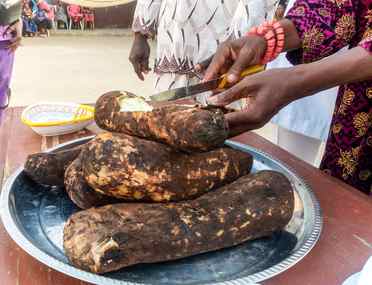 It is also important to note that the New Yam Festival is not exclusive to the Yoruba alone. Similar celebrations exist among neighboring cultures, including the Igbo, where it is widely known as Iri Ji. While the names and specific rituals may differ, the underlying principles remain similar—respect for the earth, acknowledgment of divine provision, and the social unity. This shared cultural pattern points to a broader West African understanding of agriculture as a sustaining endeavor.
Yet, within the Yoruba framework, the festival carries its own unique identity shaped by its connection to specific Orishas, moral codes, and social hierarchies. It is not just a borrowed tradition but a system that shows Yoruba philosophy in action. The land, the people, and the spiritual forces are all tied together in a relationship that the festival makes visible.
To understand the sociology of the New Yam Festival is to look beyond the surface of celebration and into the structure of society itself. It depicts how food can organize power, how rituals can regulate behavior, and how shared beliefs can maintain order across generations.
Wait a bit... Do you know that understanding the Orishas requires more than surface knowledge?
Get a structured and comprehensive eBooks on Orisha Osun, Orisha Oro, Orisha Sango, Orisha Ogun, Orisha Obatala, and Orisha Esu, covering how they are deified, rituals, taboos, festivals, oriki and more. Available individually or in bundles
The Role of Yam Beyond Food into Status and Identity
In traditional Yoruba society, yam operates as more than nourishment—it functions as a form of social currency. The size of one’s yam farm, the fullness of one’s barn, and the quality of one’s harvest all contribute to how an individual is perceived within the community. This creates a system where agriculture directly shapes social hierarchy.
Men, in particular, are often judged by their farming ability. A successful yam farmer is seen as disciplined, hardworking, and dependable. These qualities extend beyond the farm into other areas of life, including marriage and leadership. A man who cannot sustain a farm may struggle to command respect, as his inability to produce food raises questions about his reliability.
Ritual Control and Social Discipline
One of the most striking sociological features of the New Yam Festival is the strict control over when the new yam can be eaten. This rule applies to everyone, regardless of status. It creates a moment where individual desire is subordinated to collective authority.
This form of control serves multiple purposes. It prevents chaos in the distribution of resources, ensures that proper rituals are observed, and hold firm respect for tradition. More importantly, it teaches self-restraint. In a season of abundance, the ability to wait becomes a moral lesson.
The Role of Leadership and Authority
Leadership during the New Yam Festival is functional and administrative. The Ọba and community elders are responsible for initiating the rites that mark the beginning of the festival. Their actions carry weight, as they represent the collective relationship between the people, the ancestors, and the divine.
The act of the king tasting the new yam first is particularly significant. It is a public demonstration of responsibility rather than privilege. By doing so, the king assumes the role of intermediary, ensuring that the transition into the new season is properly sanctioned.
Social Renewal
The New Yam Festival is one of the most important periods for social gathering. Families return to their ancestral homes, friends reconnect, and communities come together in celebration. This gathering is not accidental—it is a deliberate reinforcement of social bonds.
During this time, unresolved conflicts are often addressed. Elders may mediate disputes, and individuals are encouraged to seek reconciliation. The logic is simple: a new season should not begin with old conflicts. Harmony within the community is seen as essential for continued prosperity.
Yoruba Herbs, Plants and Medicine Made Simple!
Spiritual knowledge is powerful—but when combined with herbal wisdom, it becomes complete. Check out Common Ailments and Their Natural Cures (preview here), Identification & Properties of Different Plants (see sample), Yoruba proverbs associated with different Herbs (see preview).
With these e-Books, you can treat illnesses naturally. Understand the proverbs behind plants/herbs. Identify plants, roots, barks with confidence.
Spiritual Gratitude and Moral Accountability
At its core, the New Yam Festival is an expression of gratitude. Offerings are made to deities and ancestors, acknowledging that the harvest is not solely the result of human effort. Orisha Oko plays a central role in this process, as the guardian of cultivated land and agricultural success.
This act of gratitude is closely tied to moral accountability. A good harvest is often interpreted as a sign of conformity with spiritual and ethical expectations. Conversely, poor yields may prompt reflection on personal and communal behavior.
The New Yam Festival in Contemporary Society
In modern times, the New Yam Festival continues to have relevance, even as lifestyles change. Urbanization and technological advancement may have altered the way people engage with agriculture, but the cultural significance of the festival remains strong.
Today, it often serves as a bridge between tradition and modern identity. It provides an opportunity for younger generations to connect with their roots, even if they are no longer directly involved in farming.
Conclusion
The New Yam Festival is far more than a celebration of harvest. It is a system that organizes social behavior, reinforces moral values, and sustains cultural identity. Through its rituals, rules, and gatherings, it shapes how individuals relate to one another and to the world around them.
Learn the general taboos of Orisha Oko in Yoruba c…

Check out the common items used in worshiping Oris…
CONNECT WITH US: