support@yorubalibrary.com
+2348073529208, 07038599574
In Yoruba view, deformity, illness, and unusual physical conditions are not always viewed as random occurrences. Instead, they are interpreted within a wider framework that connects human behavior, divine forces, and the unseen structure of existence.
It is within this framework that the association between Orisha Oko and deformity—particularly conditions resembling what is known today as Leprosy—emerges in certain oral traditions. This connection is not universal across all Yoruba communities, nor is it a central identity of the deity. However, where it appears, it has great weight that goes far beyond a literal interpretation.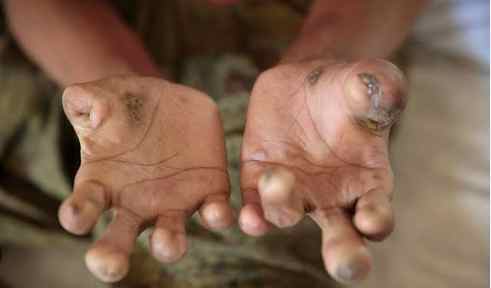 At first glance, the association may seem surprising. Orisha Oko is widely known as a deity of agriculture, fertility, and moral discipline. His domain is the cultivated land—the organized, productive space where human effort meets divine blessing. He is also linked to truth and ethical conduct, acting as a quiet enforcer of honesty within agrarian life. How then does a figure associated with fertility and productivity become connected, in some traditions, to bodily deformity?
The answer lies in Yoruba cosmology. In this worldview, imbalance often manifests in visible ways. Just as a neglected farm may produce poor crops, a life that deviates from moral or spiritual expectations may produce visible consequences. The body, in this sense, becomes a mirror of deeper realities. It shows not only health or illness but also conformity with the forces that govern life.
It is important to approach this topic with care and clarity. Traditional interpretations of conditions like leprosy were shaped by the knowledge and beliefs available at the time. Today, modern medicine understands Leprosy (also known as Hansen’s disease) as a bacterial infection with known causes and treatments. The mythological connection does not represent medical truth, but rather a cultural attempt to explain and give meaning to visible conditions that were once mysterious and often feared.
The Yoruba approach to such narratives is not always rigid or singular. Different communities may interpret the same myth in different ways, emphasizing various aspects depending on their cultural context. Some may focus on the moral lesson, others on the social implications, and others on the spiritual impacts. This diversity of interpretation is part of what gives Yoruba mythology its depth and flexibility.
It is also worth noting that Orisha Oko is not the only figure associated with physical conditions in Yoruba thought. Other Orishas has their own symbolic associations, depicting different aspects of life and experience. The connection between Orisha Oko and deformity must therefore be understood as part of a broader system where the body, society are connected.
Wait a bit... Do you know that understanding the Orishas requires more than surface knowledge?
Get a structured and comprehensive eBooks on Orisha Osun, Orisha Oro, Orisha Sango, Orisha Ogun, Orisha Obatala, and Orisha Esu, covering how they are deified, rituals, taboos, festivals, oriki and more. Available individually or in bundles
The Roots of the Association
In certain oral accounts, Orisha Oko is described as a figure whose interaction with human behavior extends into physical consequences. These narratives often arise in the context of moral transgression—particularly dishonesty, betrayal, or violation of sacred agricultural practices.
One recurring theme is the misuse of land or the breaking of agreements related to farming. Since Orisha Oko governs cultivated land, any act that disrupts its integrity—such as stealing crops, lying about harvest yields, or disrespecting communal farming rules—can be seen as an offense against him. In these stories, the resulting deformity is not arbitrary; it is presented as a manifestation of imbalance.
Deformity in Yoruba Thought
Deformity, within Yoruba cosmology, is not always interpreted literally. It often functions as a symbol of distortion—of what happens when natural or moral order is disrupted.
In the case of Orisha Oko, this is closely tied to the concept of cultivation. A well-maintained farm produces orderly, healthy crops. A neglected or mismanaged farm produces irregular, damaged yields. This agricultural logic is extended to human life. Just as the land depicts the farmer’s actions, the body can show the individual’s conformity with societal and spiritual expectations.
This does not mean that all physical conditions are viewed as moral consequences. Rather, the myth uses the idea of deformity as a way to communicate the importance of balance. It serves as a reminder that actions have consequences, even if those consequences are not always immediate or visible.
Social Implications: Stigma, Isolation, and Community Response
Historically, conditions like Leprosy had significant social stigma. Individuals affected by such conditions were often isolated, not only due to fear of contagion but also because of the meanings attached to their condition.
In the context of Orisha Oko myths, this isolation takes on additional meaning. It shows a separation from the community, which is itself a form of imbalance. Yoruba society places strong emphasis on communal living, mutual support, and shared responsibility. To be isolated is to be removed from this system.
The myths, therefore, serve a dual purpose. On one hand, they cements social norms by warning against behaviors that could lead to exclusion. On the other hand, they reflect the realities of how communities historically responded to illness and difference.
It is important to approach this aspect with sensitivity. Modern understanding recognizes the need for compassion, inclusion, and medical care. The historical stigma associated with such conditions is now widely challenged and addressed through education and public health efforts.
Yoruba Herbs, Plants and Medicine Made Simple!
Spiritual knowledge is powerful—but when combined with herbal wisdom, it becomes complete. Check out Common Ailments and Their Natural Cures (preview here), Identification & Properties of Different Plants (see sample), Yoruba proverbs associated with different Herbs (see preview).
With these e-Books, you can treat illnesses naturally. Understand the proverbs behind plants/herbs. Identify plants, roots, barks with confidence.
Moral Lessons and Ethical Framework
At its core, the connection between Orisha Oko and deformity is about ethics. It shows the idea that life must be lived in conformity with certain principles—honesty, discipline, and respect for both land and community.
The use of a visible condition as a narrative consequence strengthens this message. It creates a powerful image that is difficult to ignore. The lesson is not subtle; it is meant to be remembered and passed down.
Modern Interpretation: Bridging Myth and Medicine
Today, the connection between Orisha Oko and Leprosy is best understood symbolically rather than literally. Advances in medical science have provided clear explanations for the causes and treatment of such conditions, removing much of the mystery that once surrounded them.
However, the myth still holds cultural value. It offers insight into how past societies made sense of complex and often frightening realities. It also provides a framework for discussing moral responsibility, social cohesion, and the consequences of actions.
Conclusion
The association between Orisha Oko and deformity, particularly in relation to Leprosy, is a complex and layered aspect of Yoruba mythology. It is not a statement about disease itself, but an expression of great ideas about balance, consequence, and the visible impact of invisible forces.
Learn the general taboos of Orisha Oko in Yoruba c…

Check out the common items used in worshiping Oris…
CONNECT WITH US: