support@yorubalibrary.com
+2348073529208, 07038599574
In many societies, physical difference has historically attracted suspicion, mockery, or fear. Yet within Yoruba cosmology, certain visible differences—particularly albinism and congenital physical variations—were not originally framed as defects. They were interpreted through another view entirely. To understand this worldview is to confront one of the most misunderstood aspects of Yoruba theology: why albinos (Àfín) and some individuals born with unusual physical forms were regarded as belonging especially to Obàtálá, sometimes described as Ẹni Òrìṣà.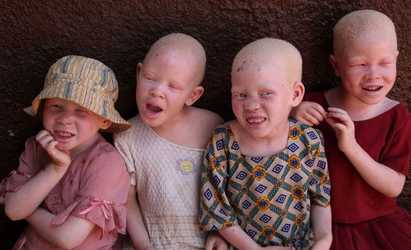 This belief cannot be dismissed as mere folklore. It rests on a complex theological foundation involving creation, purity, and the sovereignty of form. At the center of that framework stands Obatala, the Òrìṣà associated with whiteness, composure, and the molding of human bodies.
In Yoruba thought, Obàtálá is not only a primordial shaper of humanity; he is custodian of bodily structure. The narrative that he molds human beings from clay establishes him as the authority over physical form. If so, then every body—standard or unusual—falls under his jurisdiction. Nothing about human structure exists outside his creative domain.
This theological premise shaped how visible difference was interpreted. When a child was born with albinism, elders did not default to curses or evil forces. The striking whiteness of the skin was read with inner eyes (Oju Inu). Obàtálá’s color is white. His devotees wear white garments. His ritual space is marked by chalk (efun), coolness, and clarity. The appearance of an albino child—rare, luminous, visually distinct—was therefore understood through association, not hostility. This does not mean Yoruba society was free from prejudice. Human communities are complex, and fear of difference can exist anywhere. But the theological vocabulary available in traditional Yoruba culture provided an alternative to rejection. Instead of exclusion, there was a conceptual space for reverence.
The phrase Ẹni Òrìṣà—literally “a person of the Òrìṣà”—is even more telling. It suggests belonging, not alienation. It implies that such individuals are under special divine guardianship. In some communities, people born with visible physical differences were considered especially close to Obàtálá because he, as divine sculptor, bears responsibility for variation in form. To modern ears, this may sound romanticized. Yet within its original context, this belief carried ethical consequences: caution in speech, restraint in mockery, and a sense that harming such individuals risked offending a powerful deity.
Obàtálá and the Theology of Whiteness
White in Yoruba cosmology does not signify race. It signifies coolness, moral clarity, and measured power. Obàtálá’s association with white cloth (aso àlà) represents restraint and purity of intention. His rituals emphasize calm speech and controlled behavior.
When a child is born with albinism, the visual resemblance to sacred whiteness becomes symbolically powerful. The skin, hair, and sometimes eye coloration align—at least metaphorically—with Obàtálá’s ritual palette. This visual parallel encouraged interpretation through theology rather than fear.
Wait a bit... Do you know that understanding the Orishas requires more than surface knowledge?
Get a structured and comprehensive eBooks on Orisha Osun, Orisha Oro, Orisha Sango, Orisha Ogun, Orisha Obatala, and Orisha Esu, covering how they are deified, rituals, taboos, festivals, oriki and more. Available individually or in bundles
The Myth of Imperfect Molding and Its Meaning
One well-known narrative recounts that Obàtálá once molded some human forms after consuming palm wine, resulting in physical irregularities. On the surface, this story risks being misread as ridicule. But its deeper function is explanatory rather than insulting. The myth asserts two principles. First, all bodies—standard or unusual—originate from the same sacred source. Second, variation does not remove divine authorship. Even when form diverges from expectation, it remains within Obàtálá’s domain.
Importantly, in many traditional settings, individuals with physical disabilities were not expelled from society. They were often described as belonging especially to Obàtálá and were sometimes shielded from harsh treatment because harming them could provoke spiritual consequences.
Social Protection and Ritual Sensitivity
The sacred framing of albinos and certain physically different individuals functioned socially as a protective mechanism. If someone is believed to be under the guardianship of a powerful Òrìṣà, public mistreatment becomes spiritually dangerous. In some communities, it was taboo to mock an Àfín. Insults directed toward such individuals were believed to carry repercussions. This belief system encouraged restraint in speech—a moral discipline in Yoruba culture.
Additionally, during certain Obàtálá festivals, symbolic gestures of respect toward whiteness reinforced communal awareness. Though not every albino participated in ritual roles, the association remained culturally present.
Yoruba Herbs, Plants and Medicine Made Simple!
Spiritual knowledge is powerful—but when combined with herbal wisdom, it becomes complete. Check out Common Ailments and Their Natural Cures (preview here), Identification & Properties of Different Plants (see sample), Yoruba proverbs associated with different Herbs (see preview).
With these e-Books, you can treat illnesses naturally. Understand the proverbs behind plants/herbs. Identify plants, roots, barks with confidence.
Between Tradition and Modern Understanding
Contemporary medical science explains albinism as a genetic condition affecting melanin production. This explanation clarifies biological mechanism. Traditional Yoruba theology, on the other hand, addressed meaning and social placement. These two frameworks need not conflict. One explains how pigmentation occurs; the other explains how society should respond to visible difference. The theological framework, at its best, encouraged dignity.
In present-day Yoruba communities influenced by Christianity and Islam, explicit references to Obàtálá may be less frequent. Yet cultural values continues. Elders may still caution against mocking physical difference. The moral impulse persists even when theological language changes.
Conclusion
The association between Àfín, physically different individuals, and Obàtálá is not a simplistic myth. It is a theological attempt to protect dignity through divine evidence. By placing bodily variation under the authority of a revered Òrìṣà, Yoruba cosmology resisted the urge to demonize difference.
Learn the general taboos of Orisha Oko in Yoruba c…

Check out the common items used in worshiping Oris…
CONNECT WITH US: