support@yorubalibrary.com
+2348073529208, 07038599574
In traditional Yorùbá religion, ritual is not casual activity. It follows order, structure, and clear spiritual protocol. Among the most important of these rules is the principle that Èsù must receive offering first before any other Òrìṣà. This is not superstition, nor is it fear-driven practice. It is a structured theological system rooted in the role Èsù plays within the spiritual hierarchy.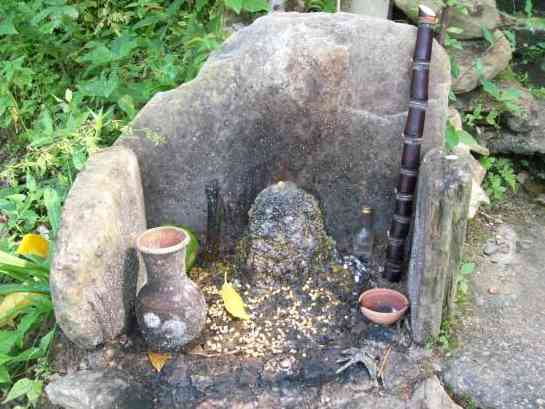 To an observer unfamiliar with Yorùbá cosmology, the idea that one deity must “eat first” may ceremonial. In reality, it shows a great understanding of communication, mediation, and cosmic order. Ritual, in Yorùbá thought, is a channel of exchange between human beings and the spiritual realm. Without proper channels, communication fails.
Èsù as the Divine Messenger and Gatekeeper
Èsù occupies a foundational position among the Òrìṣà. He is the divine messenger who carries sacrifices and prayers to their intended recipients. He is also the enforcer of spiritual contracts and the overseer of consequence.
No offering reaches any Òrìṣà without passing through him. In this sense, he functions as a spiritual gatekeeper. Just as one cannot bypass official protocol in a royal court, one cannot bypass Èsù in sacred ritual. If a devotee prepares sacrifice for Òrìṣà Ògún, Ṣàngó, Ọ̀ṣun, or any other divine force, Èsù must first acknowledge and open the way. Without that acknowledgment, the offering may not be spiritually effective.
The Meaning of “Eating” in Ritual Context
When tradition says “Èsù eats first,” it does not imply human consumption. “Eating” in this context refers to receiving offering—accepting sacrifice, palm oil, kola nut, or other ritual items. To “eat” means:
• To acknowledge the ritual.
• To authorize the spiritual transaction.
• To open the pathway for communication.
The Logic of Ritual Order
1. Communication Must Pass Through a Channel
In everyday life, messages often pass through intermediaries. In Yorùbá theology, Èsù is that intermediary. Ignoring him is equivalent to sending a message without addressing it properly.
2. He Enforces Sincerity
Èsù examines intention. If a sacrifice is performed carelessly or dishonestly, he exposes it. Receiving his acknowledgment first ensures that the offering is correctly structured.
3. He Stands at the Crossroads
Èsù governs thresholds—points where decisions are made. Ritual itself is a threshold act between human and divine. Beginning with him ensures safe passage across that boundary.
Wait a bit... Do you know that understanding the Orishas requires more than surface knowledge?
Get a structured and comprehensive eBooks on Orisha Osun, Orisha Oro, Orisha Sango, Orisha Ogun, Orisha Obatala, and Orisha Esu, covering how they are deified, rituals, taboos, festivals, oriki and more. Available individually or in bundles
Consequences of Ignoring the Protocol
Traditional narratives emphasize that ignoring Èsù’s position leads to disruption. The consequences are not random punishment; they are breakdowns in spiritual communication.
1. Ritual Ineffectiveness
Offerings made without acknowledging Èsù may not produce the intended result. The spiritual channel remains unopened.
2. Misinterpretation of Intent
Failure to follow protocol may signal disrespect. In a system where order matters, bypassing the mediator depicts disregard for structure.
3. Spiritual Imbalance
Yorùbá cosmology values balance and proper sequence. Ignoring foundational steps disturbs that balance. It is important to note that consequences are not described as uncontrolled chaos. They are structured outcomes within a moral system governed by cause and effect.
Illustrations from Oral Tradition
Yorùbá oral literature contains accounts where individuals who neglected Èsù experienced confusion, delay, or unexpected complications. These stories are instructional. Such narratives are not meant to instill fear. They serve as reminders that spiritual systems operate according to rules, just like social systems - there's process!
The Broader Religious Principle
The principle of “Èsù eats first” exhibits a universal idea: process matters. In many religious traditions around the world, there are preliminary rites, opening prayers, or mediating figures who prepare the way before major rituals proceed.
Yoruba Herbs, Plants and Medicine Made Simple!
Spiritual knowledge is powerful—but when combined with herbal wisdom, it becomes complete. Check out Common Ailments and Their Natural Cures (preview here), Identification & Properties of Different Plants (see sample), Yoruba proverbs associated with different Herbs (see preview).
With these e-Books, you can treat illnesses naturally. Understand the proverbs behind plants/herbs. Identify plants, roots, barks with confidence.
Addressing Misconceptions
Colonial interpretations often portrayed this protocol as evidence of fear or appeasement of a malevolent force. This mis-reading ignores the structured theology behind the practice.
Èsù is not bribed to prevent harm. He is acknowledged because he occupies a defined office within the spiritual hierarchy. The rule is administrative, not superstitious.
Ritual as Discipline and Order
The practice of giving Èsù precedence teaches discipline. It reinforces:
• Respect for structure
• Awareness of consequence
• Recognition of mediation
• Humility before spiritual authority
Conclusion
Èsù eats first because he stands at the gateway of spiritual communication. As messenger, enforcer, and guardian of thresholds, he must authorize the movement of sacrifice from the human realm to the divine. Ignoring this protocol does not merely break tradition; it disrupts spiritual order. Within Yorùbá cosmology, sequence is not optional.
Learn the general taboos of Orisha Oko in Yoruba c…

Check out the common items used in worshiping Oris…
CONNECT WITH US: